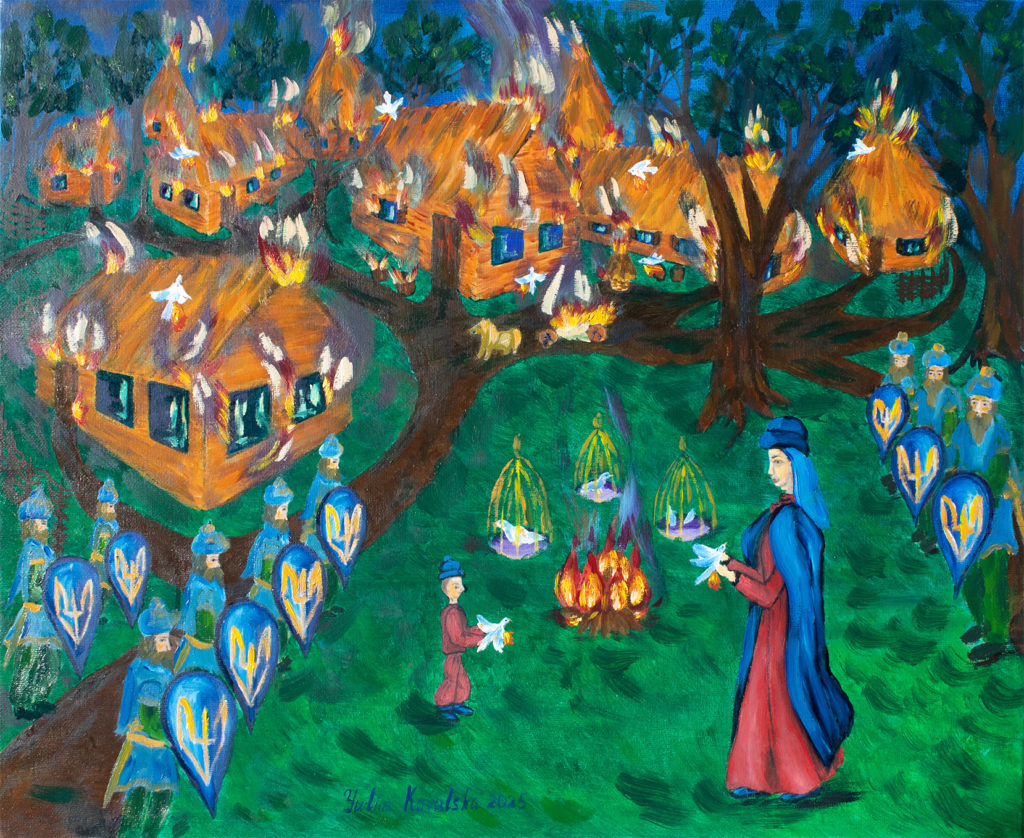
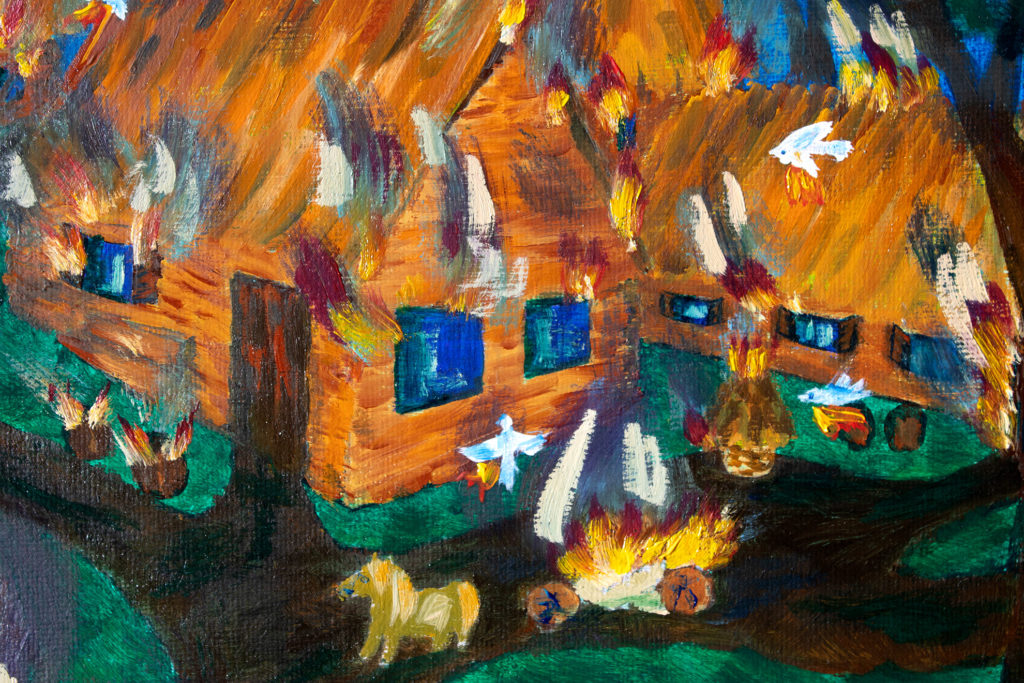
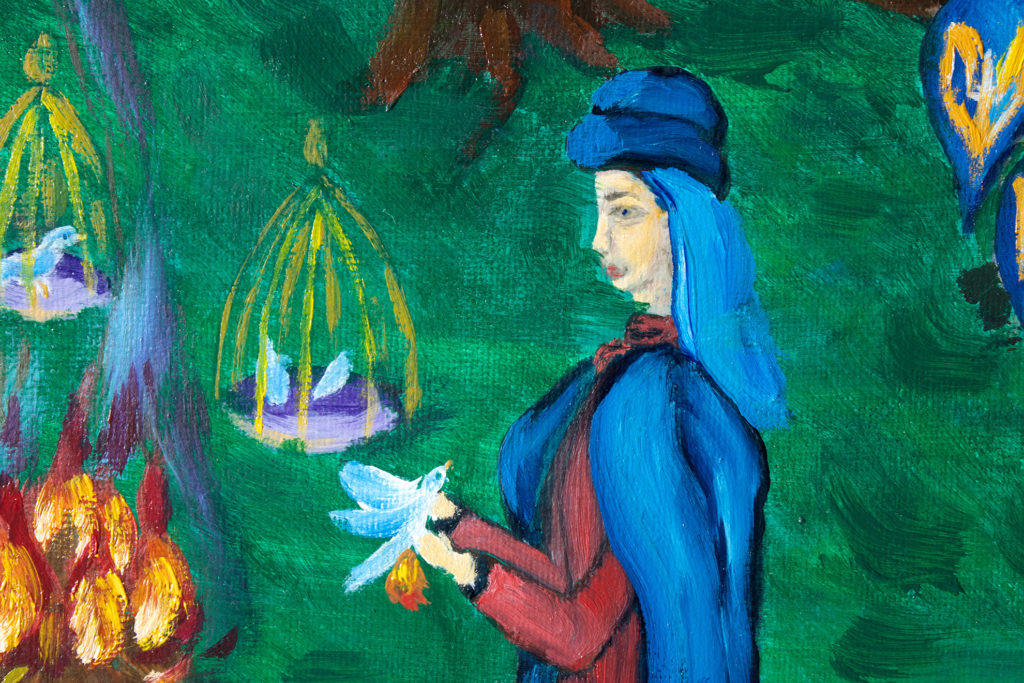
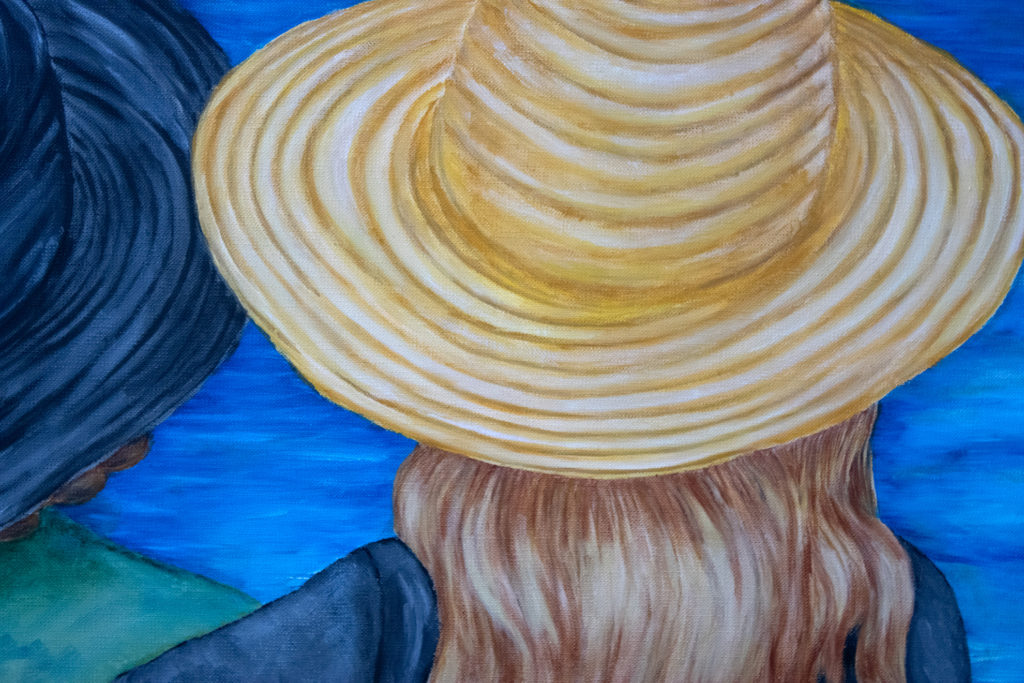
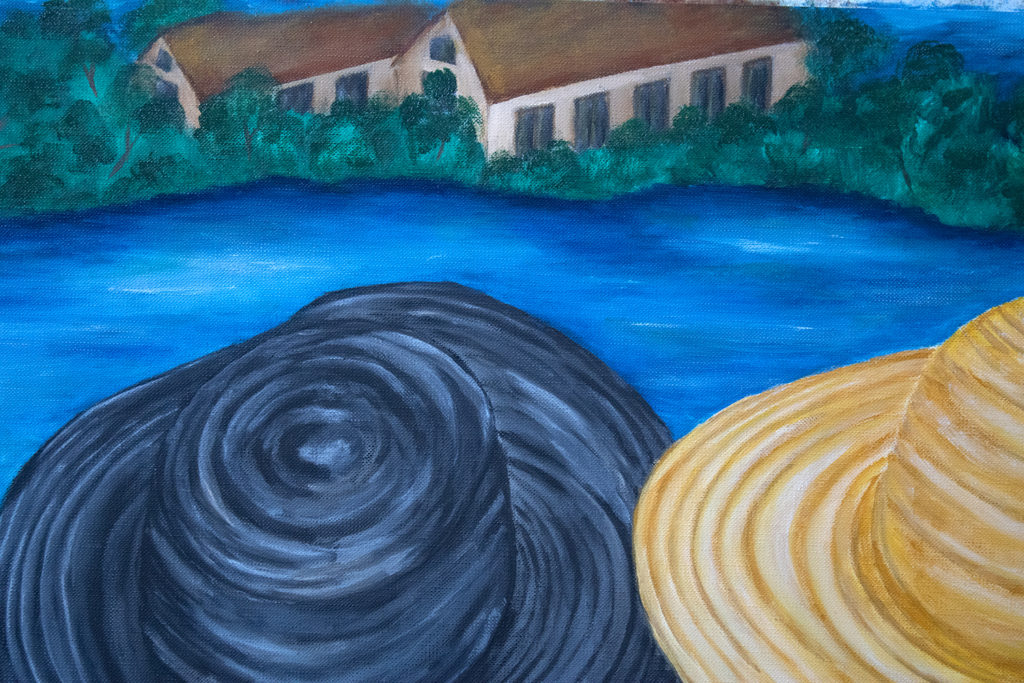
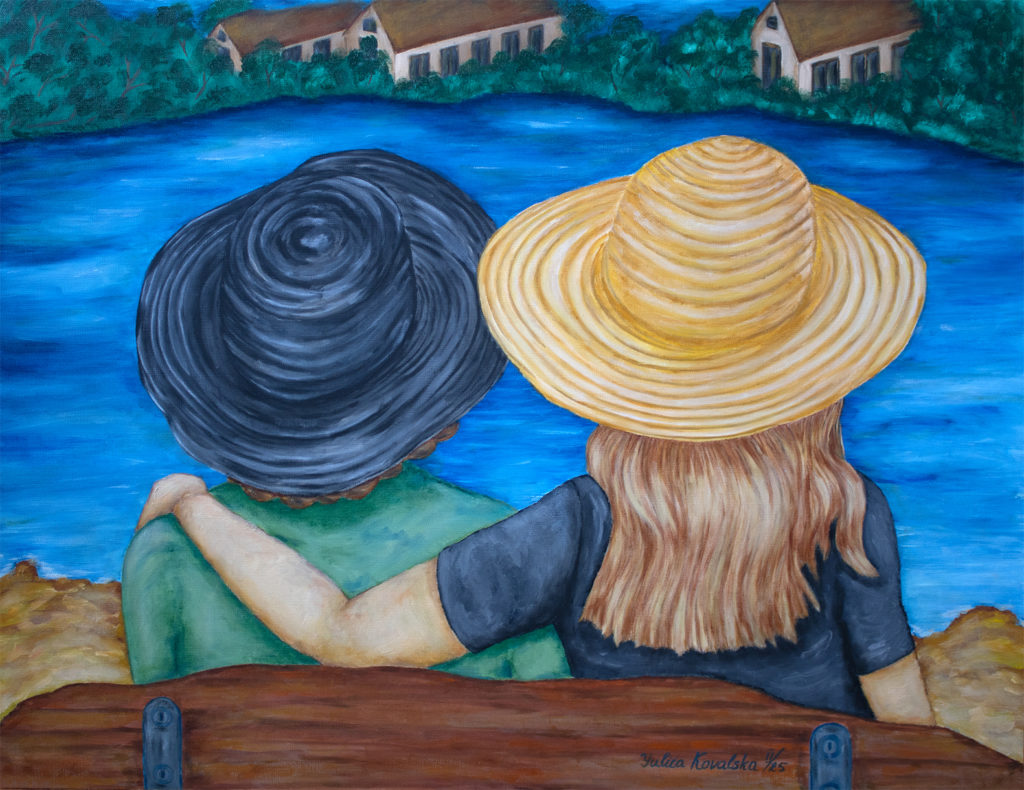
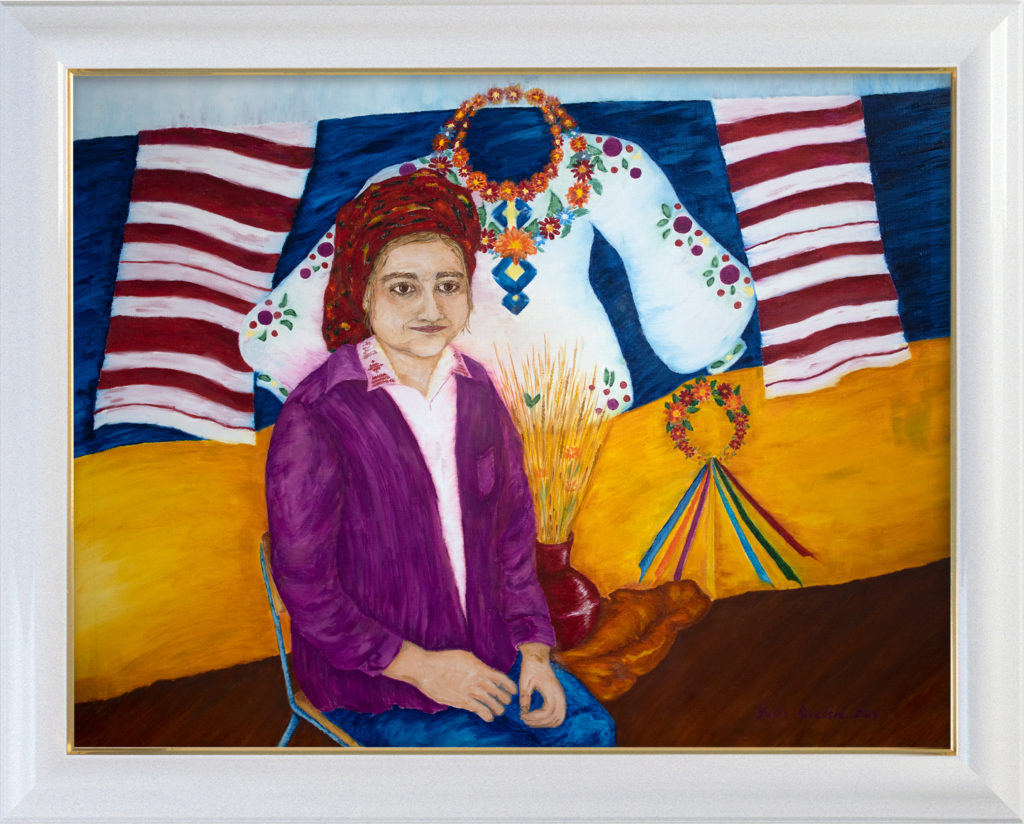
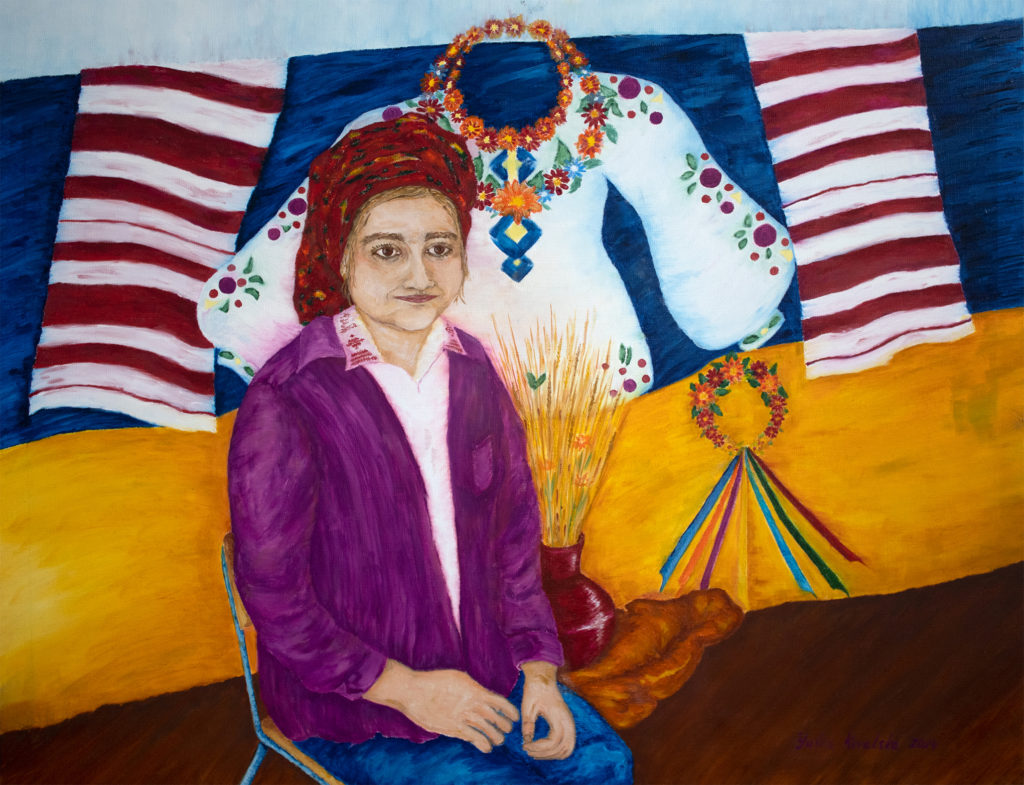
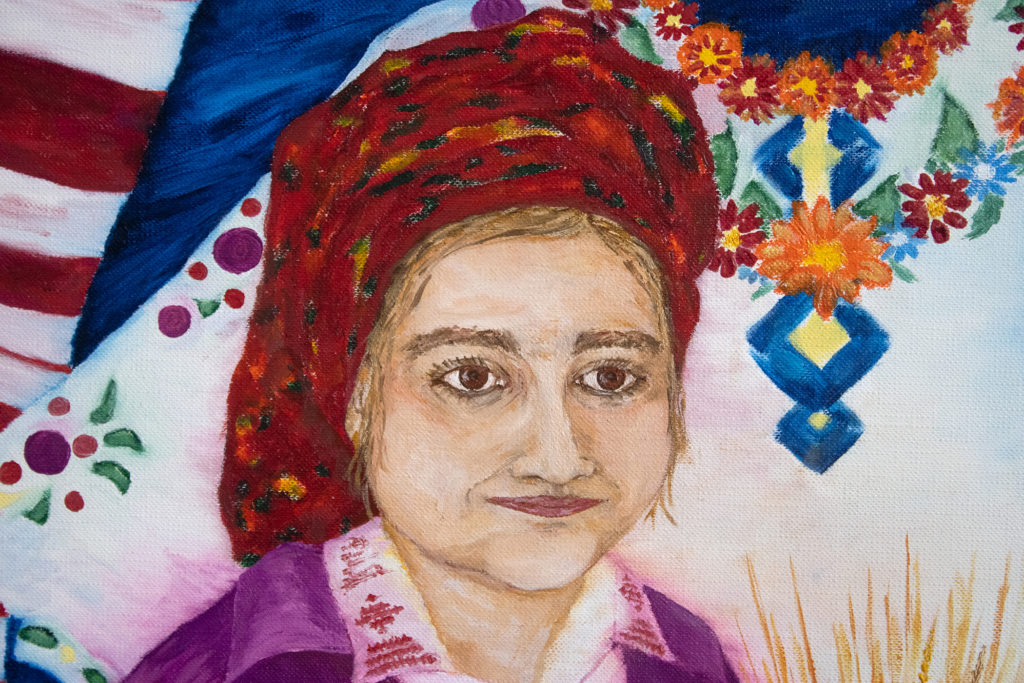
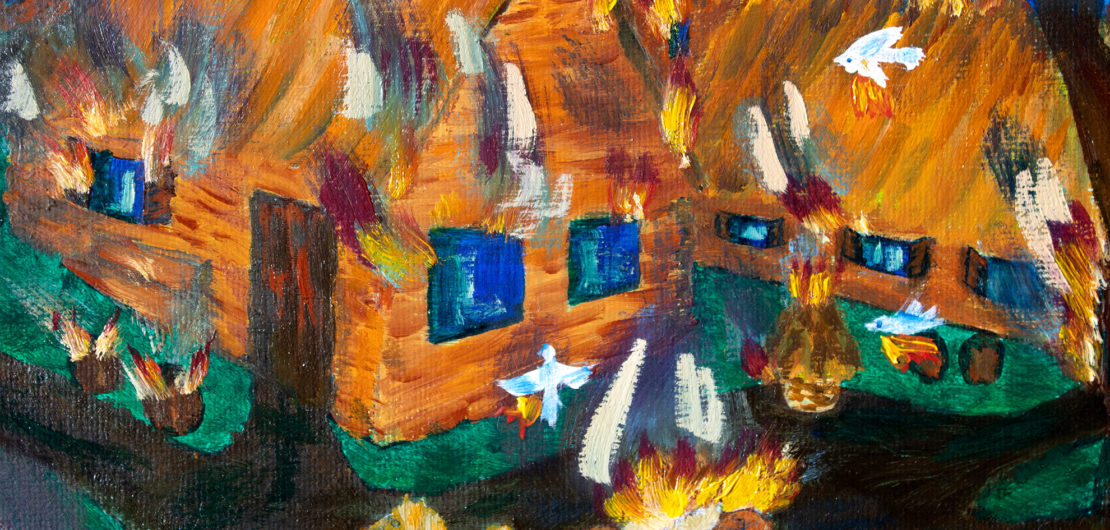
Princess Olga is a legendary woman who embodies the courage and resilience of Ukrainian women. After the death of her husband, Prince Igor, she had the strength and courage not only to raise her son, but also to take ruthless revenge for her husband’s death. The princess’s sharp mind repeatedly found the most ingenious solutions to the most critical situations of those times. According to historical records, the princess’s revenge on the Drevlyans was repeated, which clearly reflects her temperament. The first time, when after Igor’s death it was decided to marry Olga to the Drevlyan prince Mal, 20 of the ‘best men’ were sent to her, and the princess ordered them to be buried alive. The second time, Olga herself asked for the best men to be sent to her, and when the envoys arrived, they were burned in a bathhouse. The third time, using an ancient ritual called a trisna, Olga ordered the drunken Drevlyans to be killed. The fourth act of revenge took place after a year-long siege of the city of Iskoroten. Through her envoys, Olga asked for three pigeons and three sparrows from each household under the pretext of a light tribute and that the revenge was supposedly over. The Drevlyans agreed, and on the princess’s orders, they tied tinder to each bird, which they set alight when it got dark and released the birds. Thus, Iskoroten burned down, and Olga avenged the death of her husband Igor.
TITLE: Princess Olga – the fourth revenge
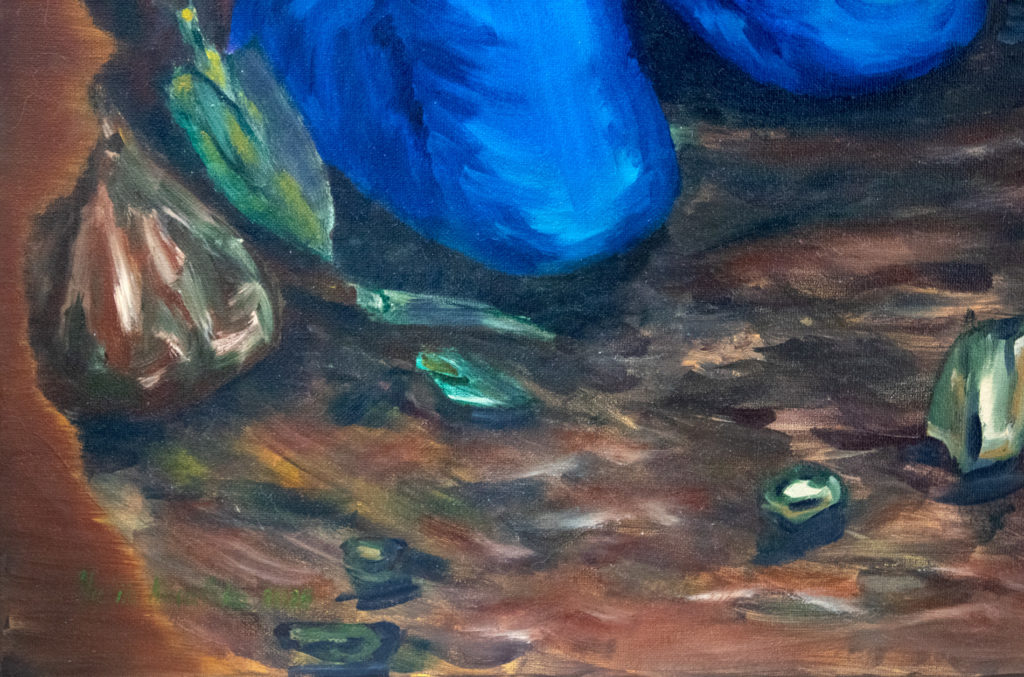
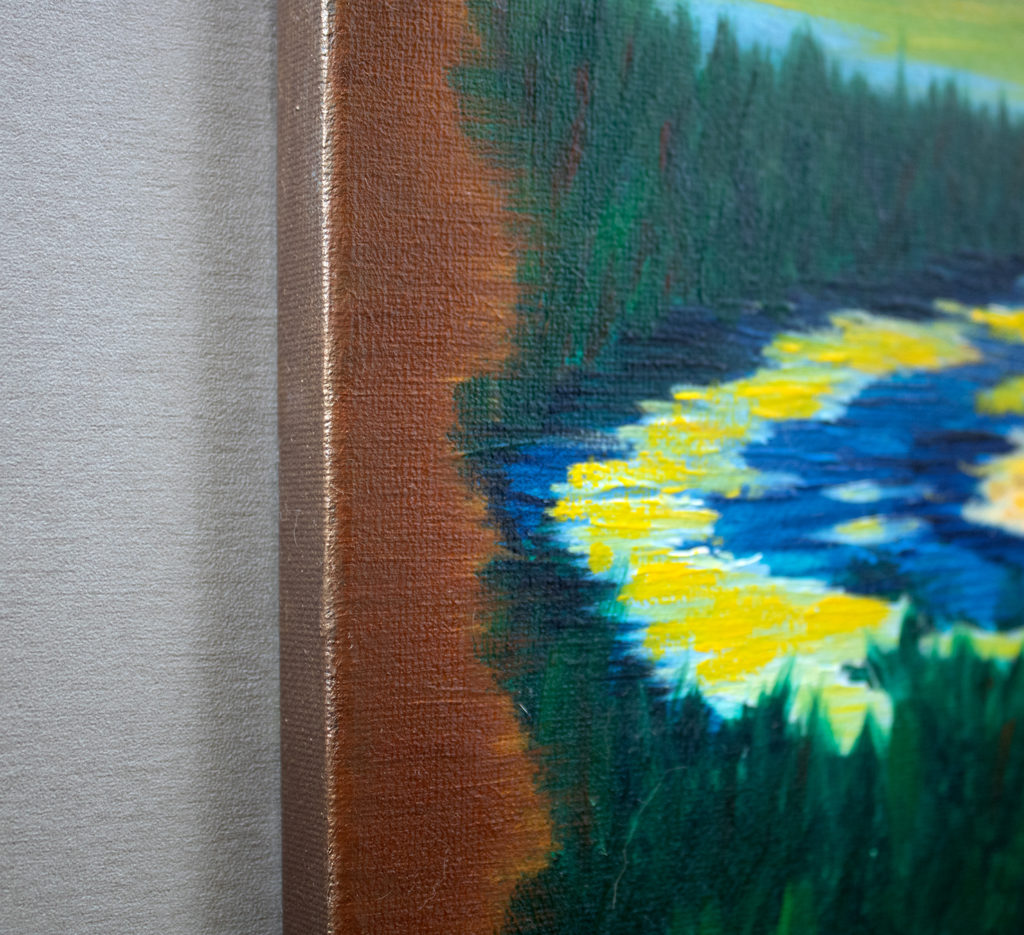
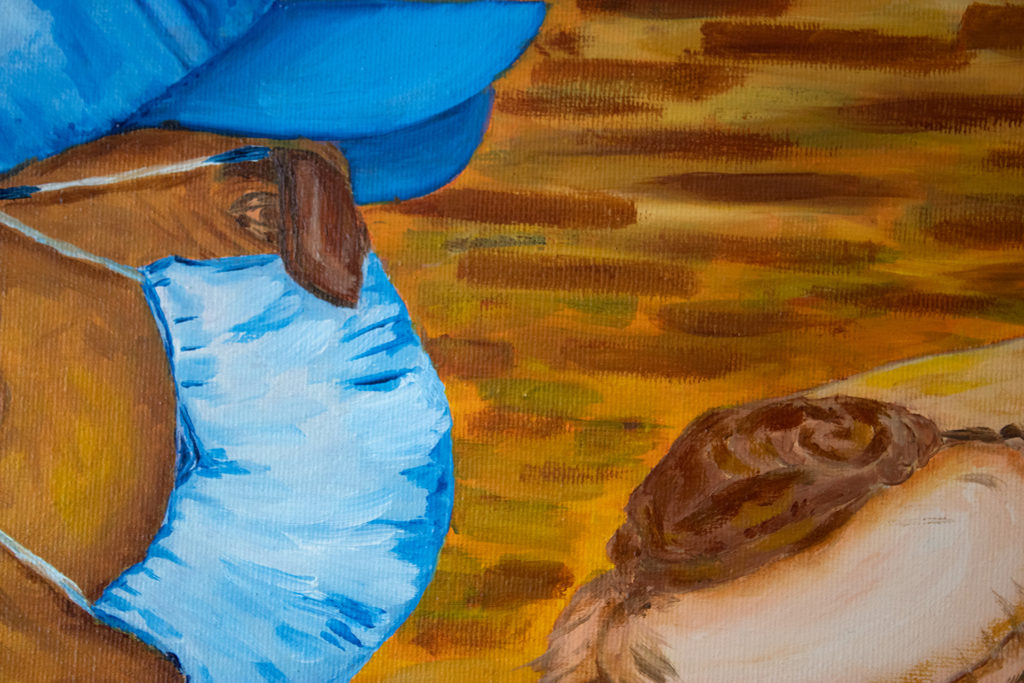
TITLE: Princess Olga – the fourth revenge. Close-up
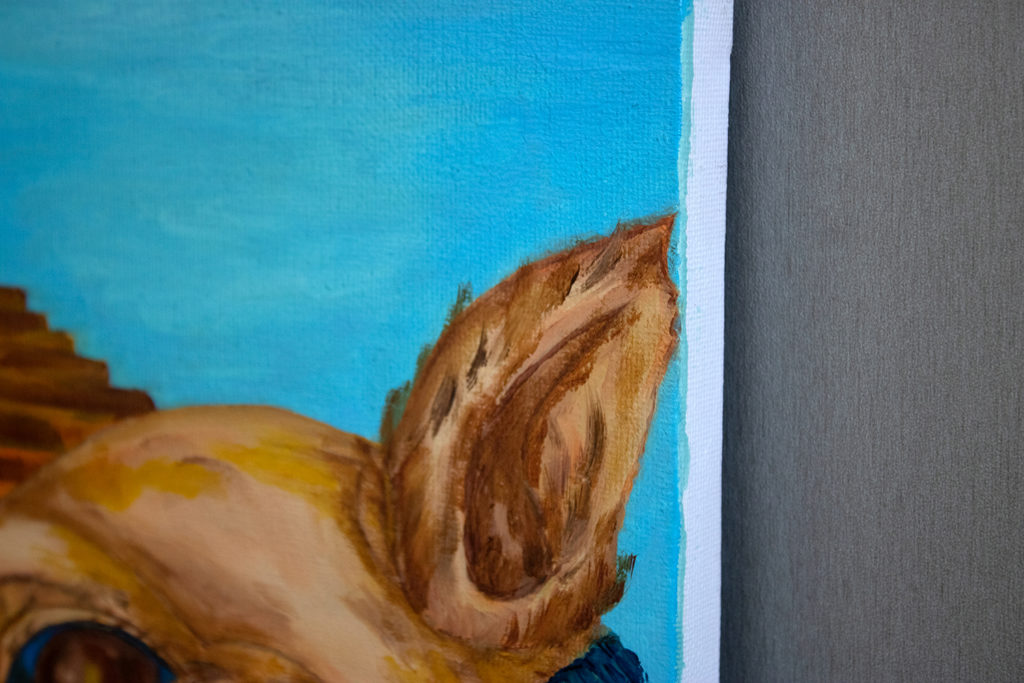
TITLE: Princess Olga – the fourth revenge. Close-up
TITLE: Princess Olga – the fourth revenge. Close-up. Signature of the artist
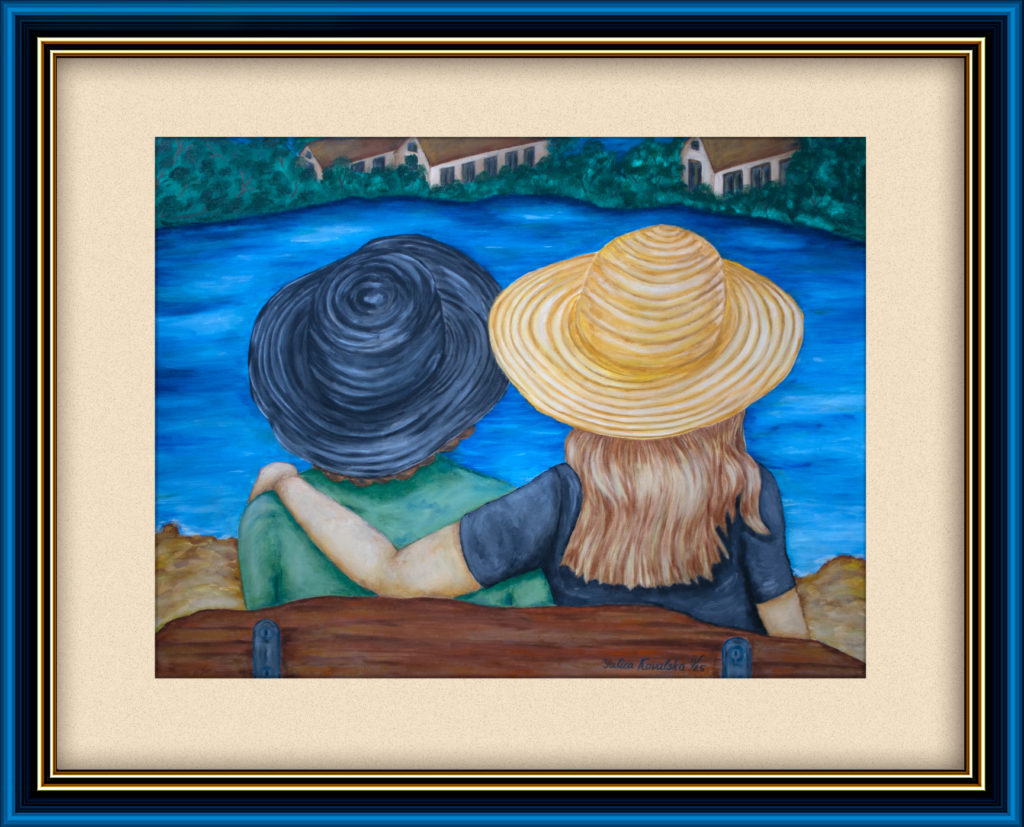
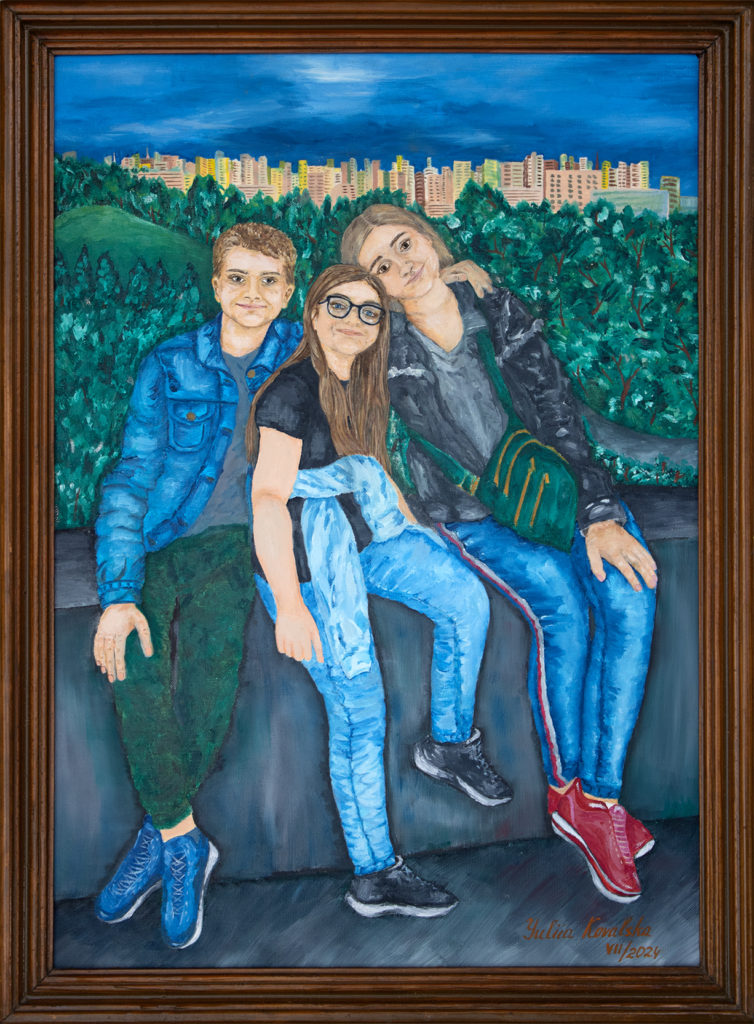
TITLE: Princess Olga – the fourth revenge. Frame option
If you are interested in this painting and would like to purchase it, please fill out and send the feedback form on the home page. You can also purchase this painting at the online galleries linked on the home page. Dispatch from Kiev (Ukraine)
TITLE: Princess Olga – the fourth revenge YEAR: 2025 ARTWORK TYPE: Original Art/One of a kind DIMENSIONS: 40х50cm TECHNIQUES: Oil on acrylic underpainting RELATED THEMES: Landscape, history SUPPORT OR SURFACE: Canvas on the canvas-stretcher FRAMING: No CATALOGUE N: Kovalska136
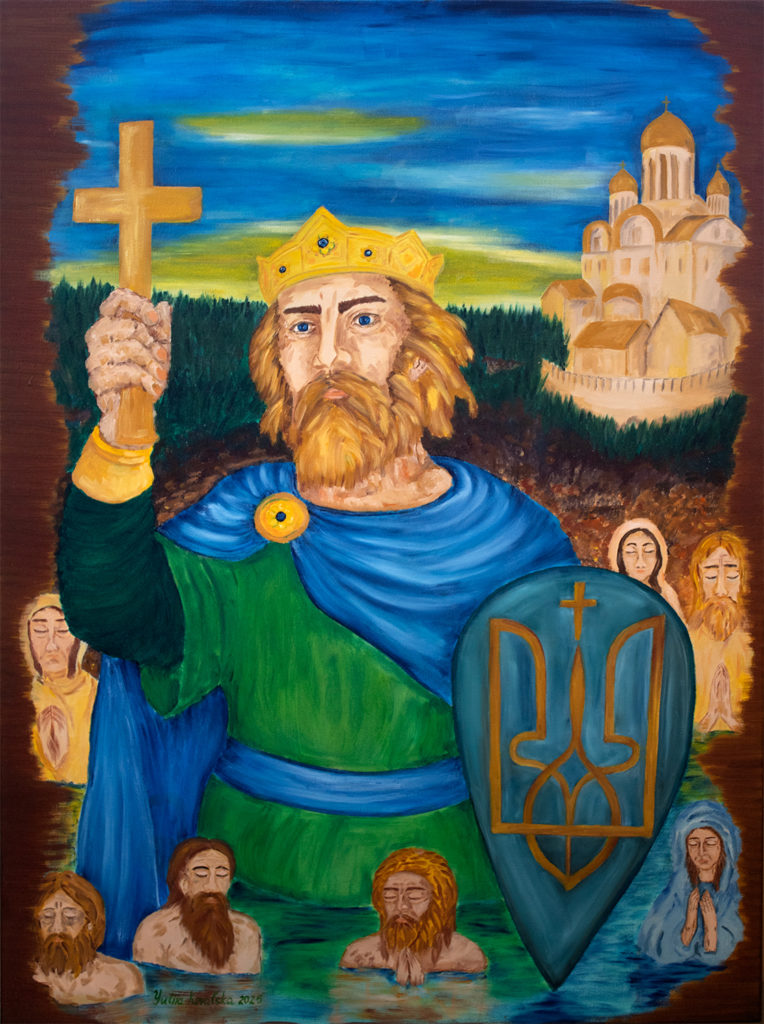
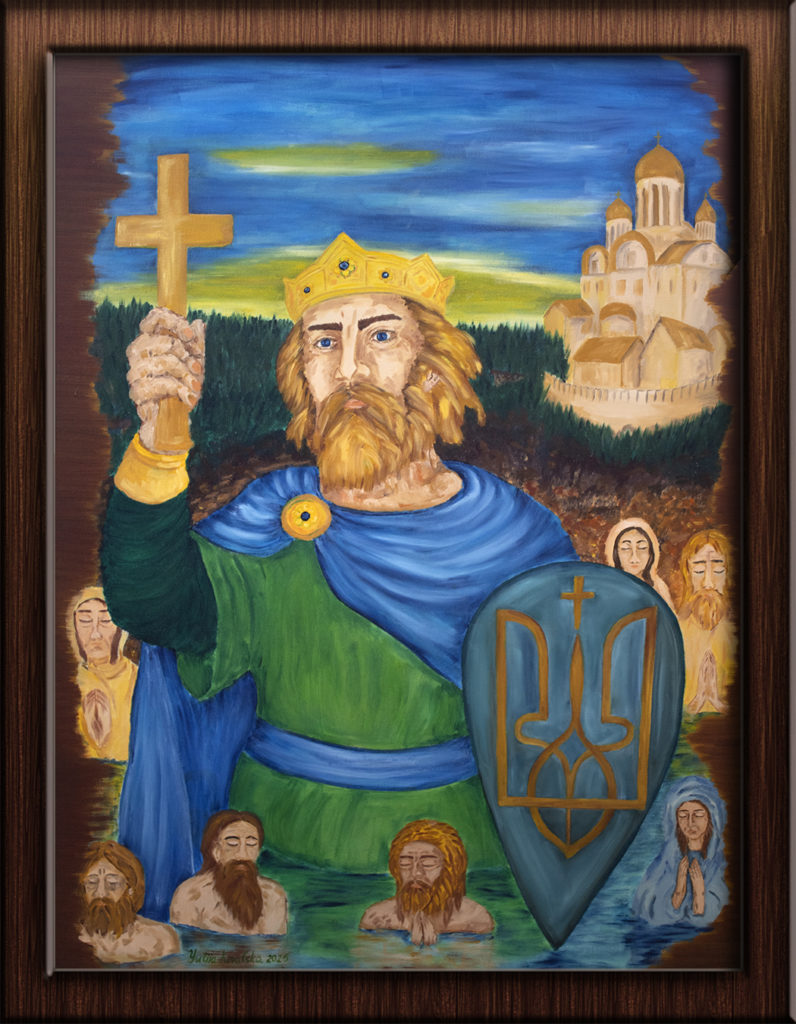
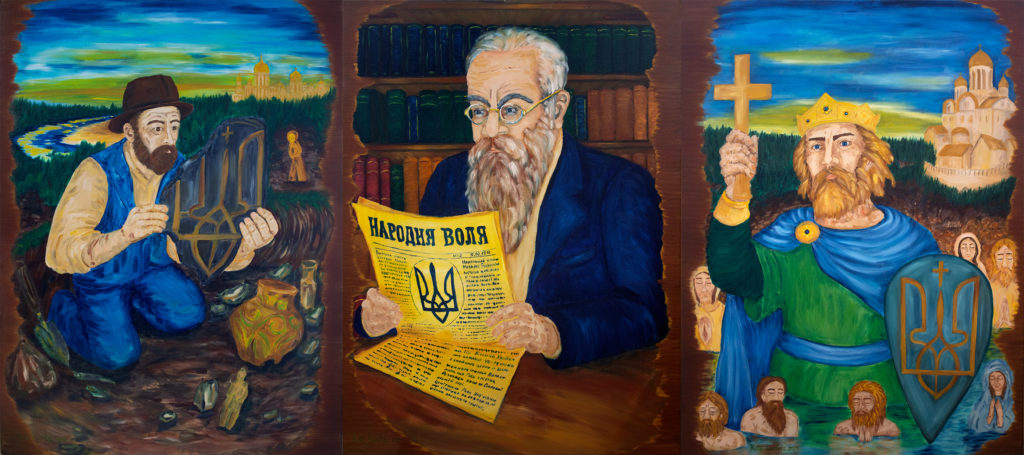
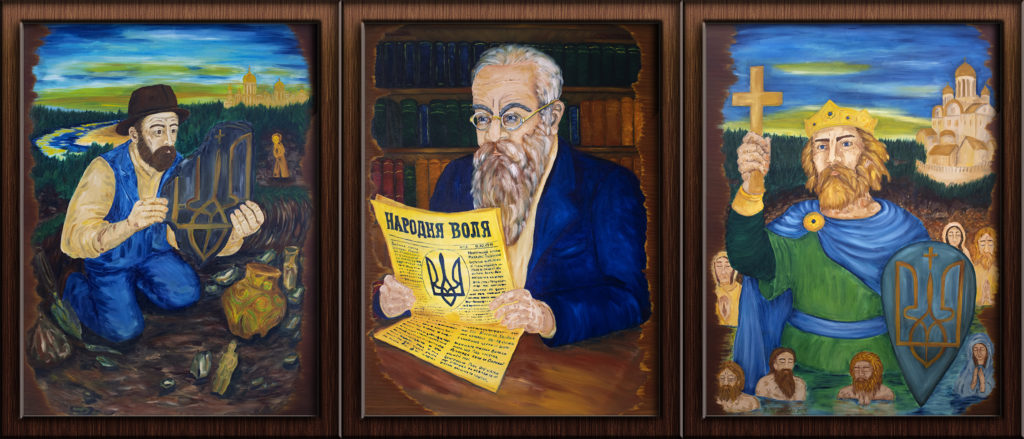
The painting, which is the right-hand panel of the triptych ‘Freedom’, depicts Grand Prince Vladimir Sviatoslavich of Kiev, under whose rule the Christianisation of Rus took place. The theme that unites the paintings in this triptych is, first and foremost, the coat of arms of our state, the continuity of generations, the continuity of history, and the interconnection of important historical events. The trident depicted on Prince Vladimir’s shield has been a symbol of our country since ancient times. Even in the days of Kievan Rus, the definition of state power and the continuity of statehood traditions, symbolised by the trident, was of great importance. The history of the trident dates back to the time of the Rurikids, who used it literally everywhere: from money to bricks for building structures. But the trident appeared much earlier on the territory of modern Ukraine. Archaeological finds indicate that the Trypillians used the trident as a sign of elders as early as the 3rd-4th centuries BC. Many different hypotheses have been put forward as to what the Ukrainian coat of arms symbolises. None of them has been fully proven, so there is still no reliable and comprehensive interpretation. A fairly common opinion is that the trident symbolises Rarok, the messenger of heavenly justice, or a falcon flying down. In many cultures, this bird was of great importance, as it was the embodiment of victory over evil, a symbol of power, indestructible strength and valour. In ancient Slavic culture, the falcon also occupied a special place at the top of the world tree. Among the various interpretations, there are other associations, including that the Ukrainian trident is an ancient religious symbol, a tripod candlestick, an anchor, an ear of wheat, a crown, a bow and arrow, and a triune sacrifice for the victory of life over death. Some experts on Ukrainian culture believe that the coat of arms of Ukraine can be deciphered as the word ‘VOLYA’ (This ancient russian word has several meanings: will, liberty, freedom), the letters of which make up the modern trident. But whatever it symbolises, the trident symbolises above all the will of the people, the indestructibility of the country, and embodies the connection between generations. Today, the trident is the coat of arms of Ukraine and has long been a symbol of the indestructibility and struggle of Ukrainians for freedom.
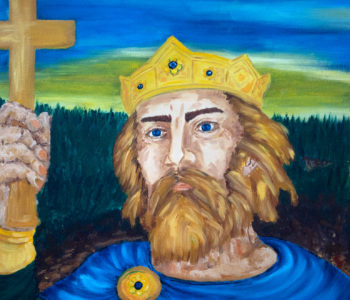
Prince Volodymyr — godfather of Kievan Rus
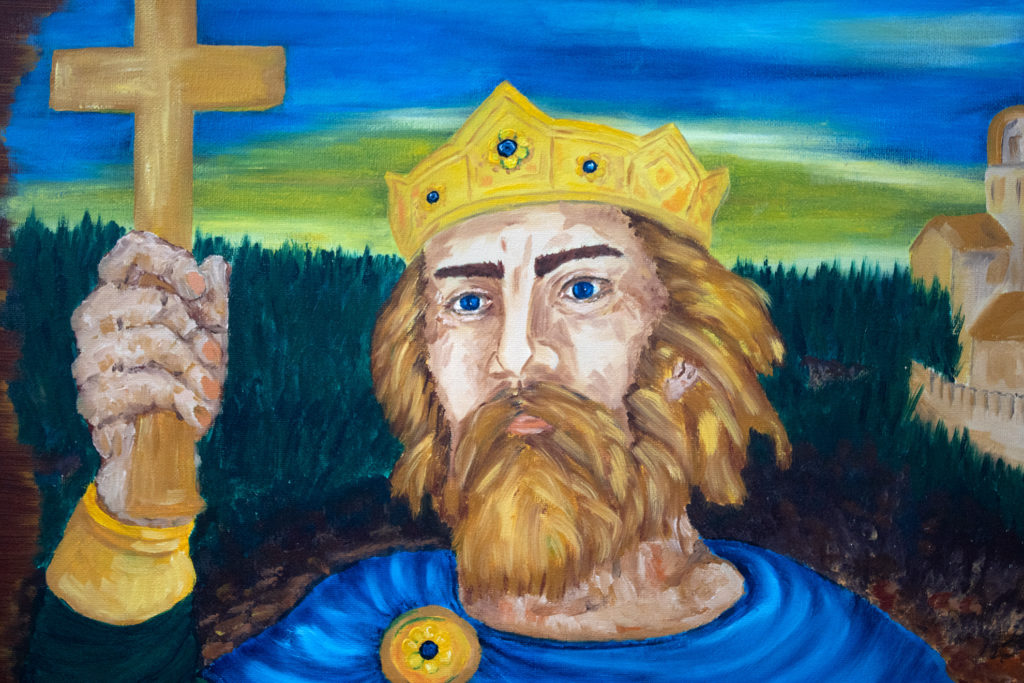
Prince Volodymyr — godfather of Kievan Rus. Close-up
Prince Volodymyr — godfather of Kievan Rus. Sidepiece. Close-up
Prince Volodymyr — godfather of Kievan Rus. Close-up. Signature of the artist
Prince Volodymyr — godfather of Kievan Rus. Frame option
If you are interested in this painting and would like to purchase it, please fill out and send the feedback form on the home page. You can also purchase this painting at the online galleries linked on the home page. Dispatch from Kiev (Ukraine)
TITLE: Prince Volodymyr — godfather of Kievan Rus Triptych “Freedom”. Right part YEAR: 2025 ARTWORK TYPE: Original Art/One of a kind DIMENSIONS: 60х80cm TECHNIQUES: Oil RELATED THEMES: Portrait, history SUPPORT OR SURFACE: Canvas on the canvas-stretcher FRAMING: No CATALOGUE N: Kovalska133r
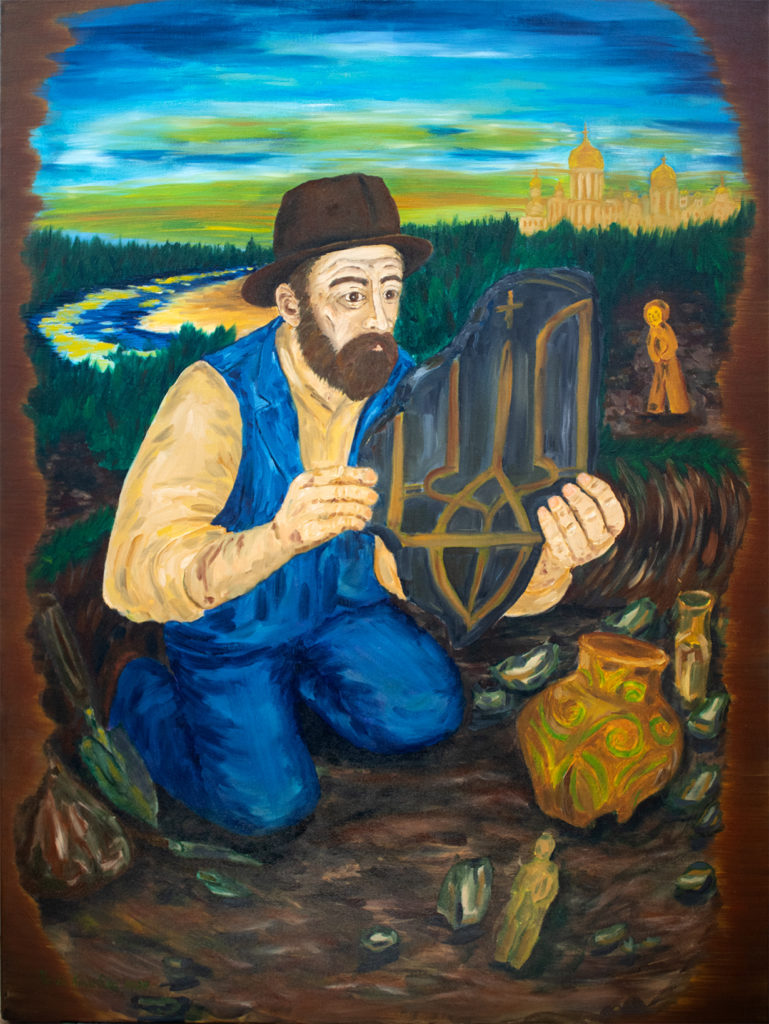
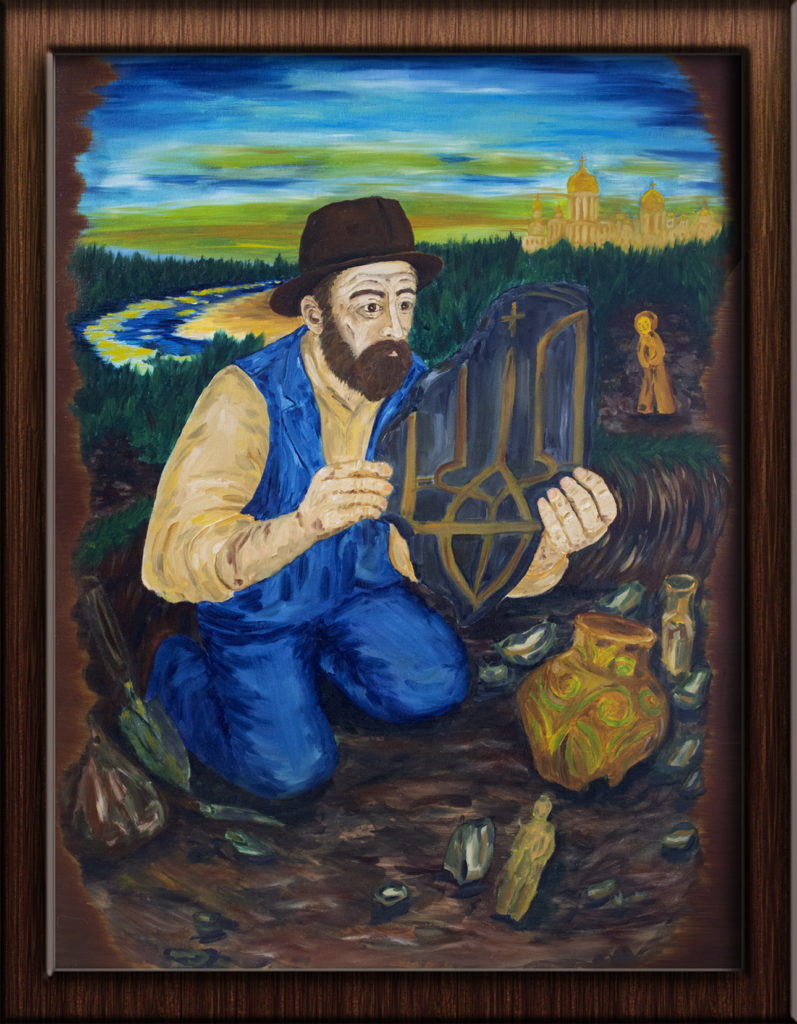
Vikentiy Khvoika (real name Čeněk Chvojka, Czech) was a self-taught Russian archaeologist of Czech origin, one of the founders of Ukrainian archaeology, the discoverer of the Trypillian culture in the Kyiv region, and a researcher of the Scythian, Zarubintsy (3rd century BC — 4th century AD), Chernyakhov (2nd—7th centuries) and early Slavic cultures. In 1907, during archaeological excavations in Kiev, Chvojka stumbled upon a unique find — an ancient plinth with a trident engraved on it. It was the symbol of Vladimir Sviatoslavich, which later became the coat of arms of independent Ukraine. The painting, which is the left part of the triptych ‘Freedom’, depicts the moment when the ancient symbol of princely power was found. The theme that unites the paintings in this triptych is, first and foremost, the coat of arms of our state, the continuity of generations, the continuity of history, and the interconnection of important historical events. The trident has been a symbol of our country since ancient times. Even in the days of Kievan Rus, the definition of state power and the continuity of statehood traditions, symbolised by the trident, was of great importance. The history of the trident dates back to the time of the Rurikids, who used it literally everywhere: from money to bricks for building structures. But the trident appeared much earlier on the territory of modern Ukraine. Archaeological finds indicate that the Trypillians used the trident as a sign of elders as early as the 3rd-4th centuries BC. Many different hypotheses have been put forward as to what the Ukrainian coat of arms symbolises. None of them has been fully proven, so there is still no reliable and comprehensive interpretation. A fairly common opinion is that the trident symbolises Rarok, the messenger of heavenly justice, or a falcon flying down. In many cultures, this bird was of great importance, as it was the embodiment of victory over evil, a symbol of power, indestructible strength and valour. In ancient Slavic culture, the falcon also occupied a special place at the top of the world tree. Among the various interpretations, there are other associations, including that the Ukrainian trident is an ancient religious symbol, a tripod candlestick, an anchor, an ear of wheat, a crown, a bow and arrow, and a triune sacrifice for the victory of life over death. Some experts on Ukrainian culture believe that the coat of arms of Ukraine can be deciphered as the word ‘VOLYA’ (This ancient russian word has several meanings: will, liberty, freedom), the letters of which make up the modern trident. But whatever it symbolises, the trident symbolises above all the will of the people, the indestructibility of the country, and embodies the connection between generations. Today, the trident is the coat of arms of Ukraine and has long been a symbol of the indestructibility and struggle of Ukrainians for freedom.
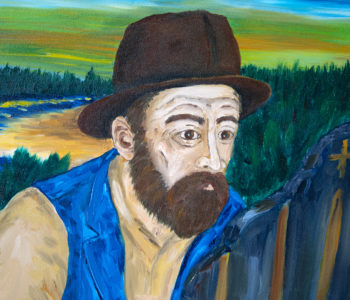
Vikentiy Khvoyka. Kyiv artefacts from the princely era
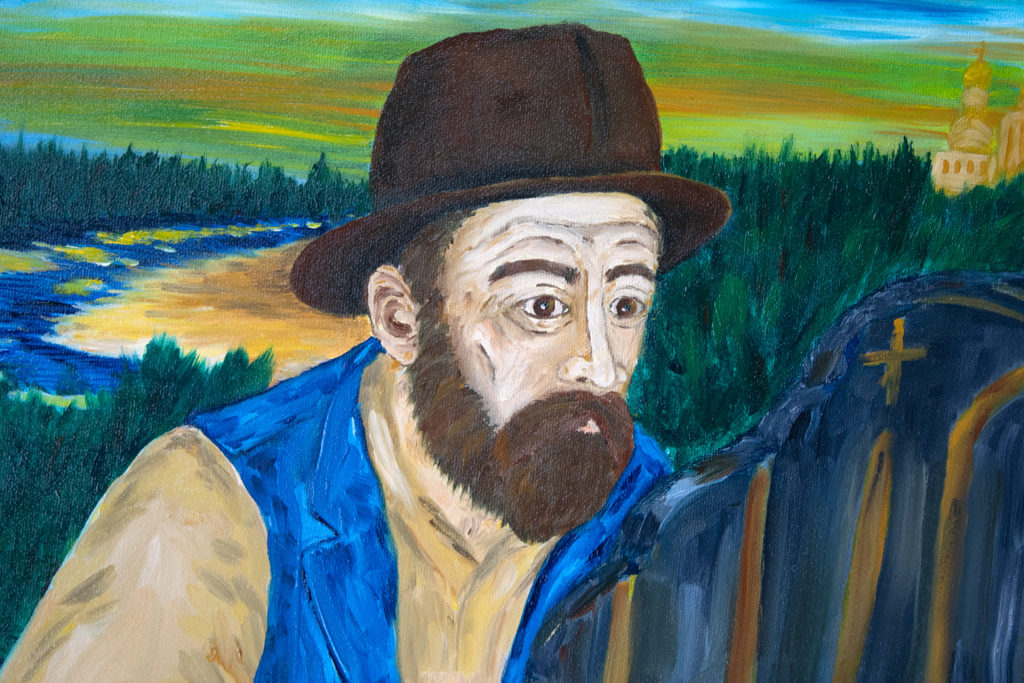
Vikentiy Khvoyka. Kyiv artefacts from the princely era. Close-up
Vikentiy Khvoyka. Kyiv artefacts from the princely era. Close-up
Vikentiy Khvoyka. Kyiv artefacts from the princely era. Sidepiece. Close-up
Vikentiy Khvoyka. Kyiv artefacts from the princely era. Close-up. Signature of the artist
Vikentiy Khvoyka. Kyiv artefacts from the princely era. Frame option
If you are interested in this painting and would like to purchase it, please fill out and send the feedback form on the home page. You can also purchase this painting at the online galleries linked on the home page. Dispatch from Kiev (Ukraine)
TITLE: Vikentiy Khvoyka. Kyiv artefacts from the princely era Triptych “Freedom”. Left part YEAR: 2025 ARTWORK TYPE: Original Art/One of a kind DIMENSIONS: 60х80cm TECHNIQUES: Oil RELATED THEMES: Portrait, history SUPPORT OR SURFACE: Canvas on the canvas-stretcher FRAMING: No CATALOGUE N: Kovalska133l
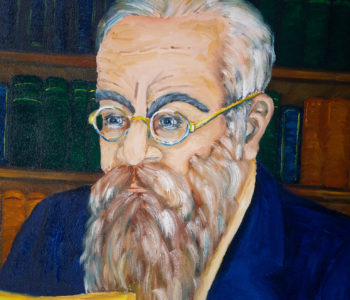
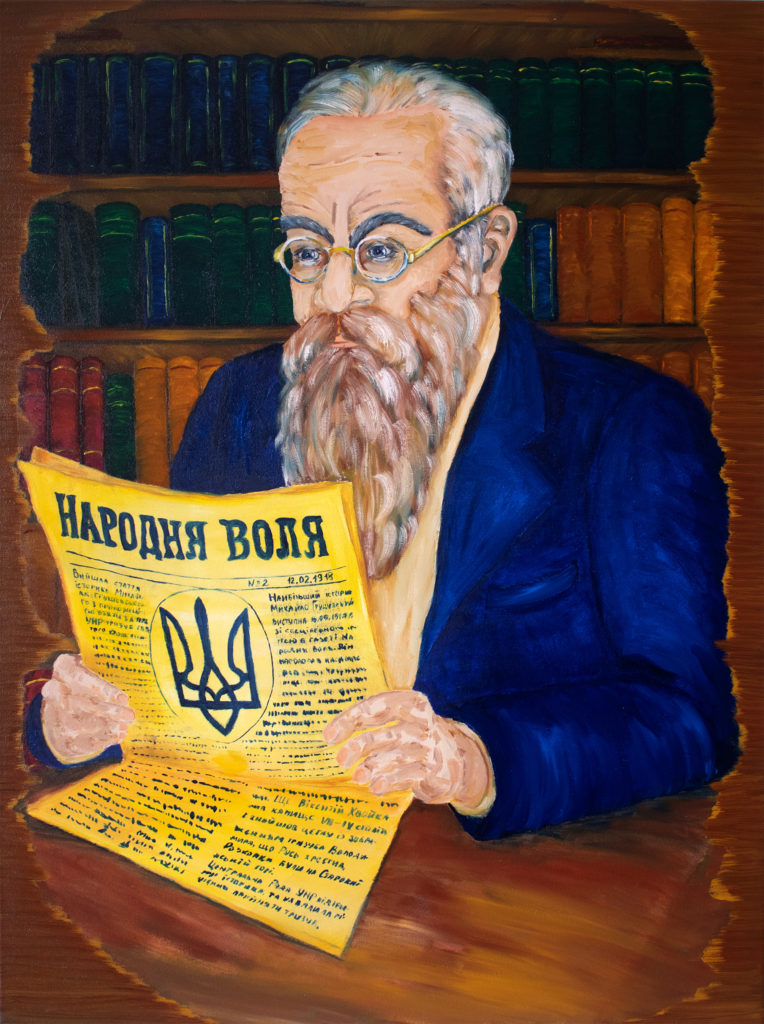
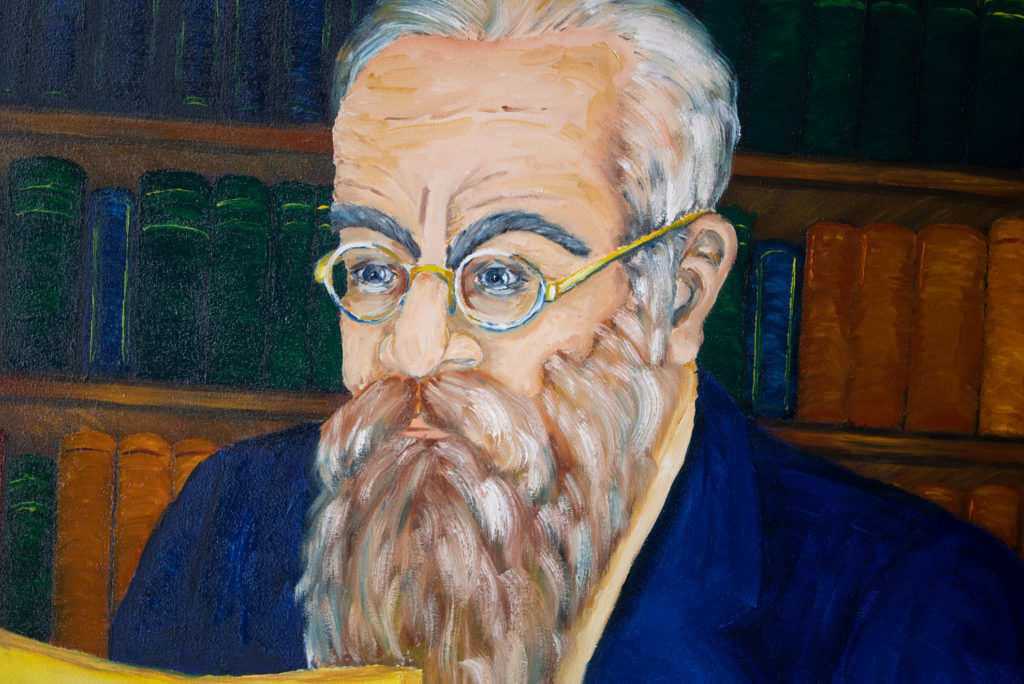
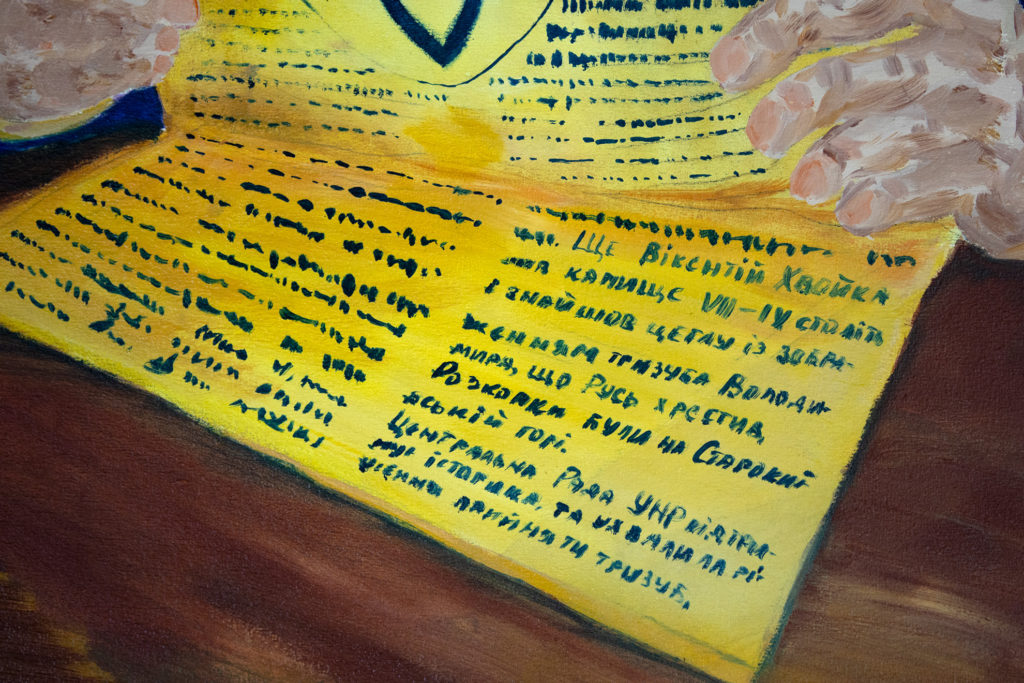
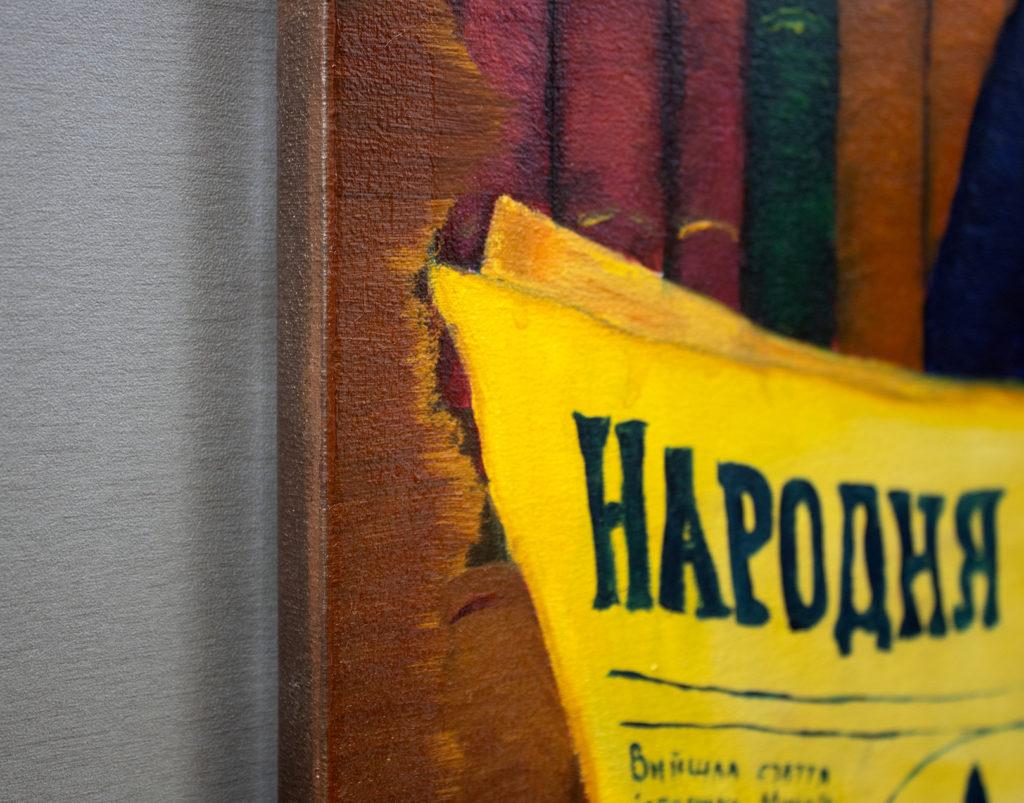
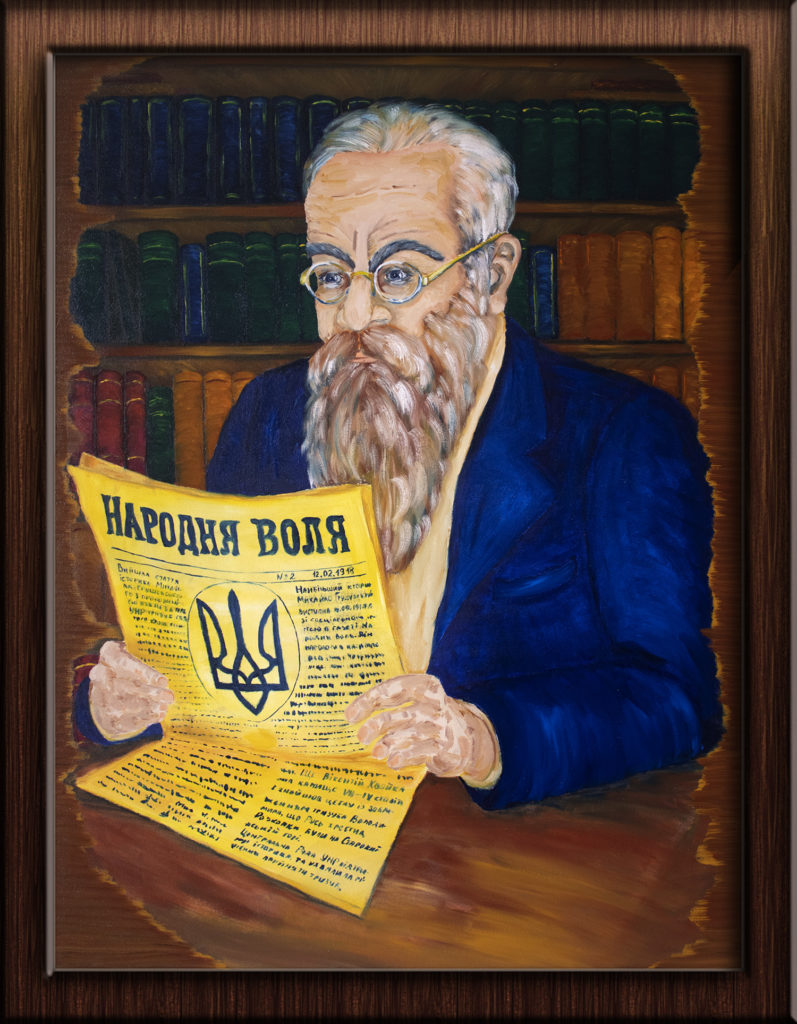
The painting, which is the central part of the triptych ‘Freedom’, depicts Mykhailo Hrushevsky, a Ukrainian historian, public figure and politician. He was the chairman of the Central Rada of the Ukrainian People’s Republic (1917-1918). At Hrushevsky’s suggestion, on 12 (25) February, at a meeting of the Small Rada in Korosten, the trident was approved as the coat of arms of the Ukrainian People’s Republic, and it became the coat of arms of independent Ukraine in 1991. The theme that unites the paintings in this triptych is, first and foremost, the coat of arms of our state, the continuity of generations, the continuity of history, and the interconnection of important historical events. The trident has been a symbol of our country since ancient times. Even in the days of Kievan Rus, the definition of state power and the continuity of statehood traditions, symbolised by the trident, was of great importance. The history of the trident dates back to the time of the Rurikids, who used it literally everywhere: from money to bricks for building structures. But the trident appeared much earlier on the territory of modern Ukraine. Archaeological finds indicate that the Trypillians used the trident as a sign of elders as early as the 3rd-4th centuries BC. Many different hypotheses have been put forward as to what the Ukrainian coat of arms symbolises. None of them has been fully proven, so there is still no reliable and comprehensive interpretation. A fairly common opinion is that the trident symbolises Rarok, the messenger of heavenly justice, or a falcon flying down. In many cultures, this bird was of great importance, as it was the embodiment of victory over evil, a symbol of power, indestructible strength and valour. In ancient Slavic culture, the falcon also occupied a special place at the top of the world tree. Among the various interpretations, there are other associations, including that the Ukrainian trident is an ancient religious symbol, a tripod candlestick, an anchor, an ear of wheat, a crown, a bow and arrow, and a triune sacrifice for the victory of life over death. Some experts on Ukrainian culture believe that the coat of arms of Ukraine can be deciphered as the word ‘VOLYA’ (This ancient russian word has several meanings: will, liberty, freedom), the letters of which make up the modern trident. But whatever it symbolises, the trident symbolises above all the will of the people, the indestructibility of the country, and embodies the connection between generations. Today, the trident is the coat of arms of Ukraine and has long been a symbol of the indestructibility and struggle of Ukrainians for freedom.
Mykhailo Hrushevsky. A historical view of the political unity of the nation
Mykhailo Hrushevsky. A historical view of the political unity of the nation. Close-up
Mykhailo Hrushevsky. A historical view of the political unity of the nation. Close-up
Mykhailo Hrushevsky. A historical view of the political unity of the nation. Sidepiece. Close-up
Mykhailo Hrushevsky. A historical view of the political unity of the nation. Close-up. Signature of the artist
Mykhailo Hrushevsky. A historical view of the political unity of the nation. Frame option
If you are interested in this painting and would like to purchase it, please fill out and send the feedback form on the home page. You can also purchase this painting at the online galleries linked on the home page. Dispatch from Kiev (Ukraine)
TITLE: Mykhailo Hrushevsky. A historical view of the political unity of the nation Triptych “Freedom”. Central part YEAR: 2025 ARTWORK TYPE: Original Art/One of a kind DIMENSIONS: 60х80cm TECHNIQUES: Oil RELATED THEMES: Portrait, history SUPPORT OR SURFACE: Canvas on the canvas-stretcher FRAMING: No CATALOGUE N: Kovalska133c
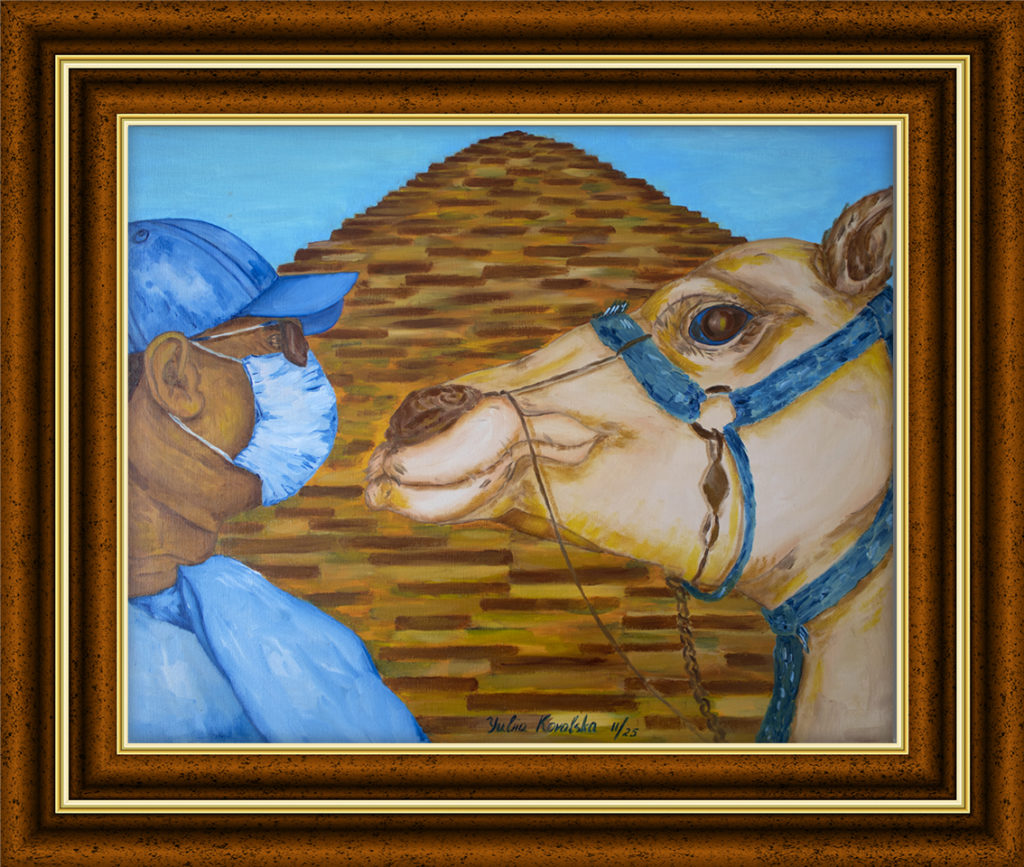
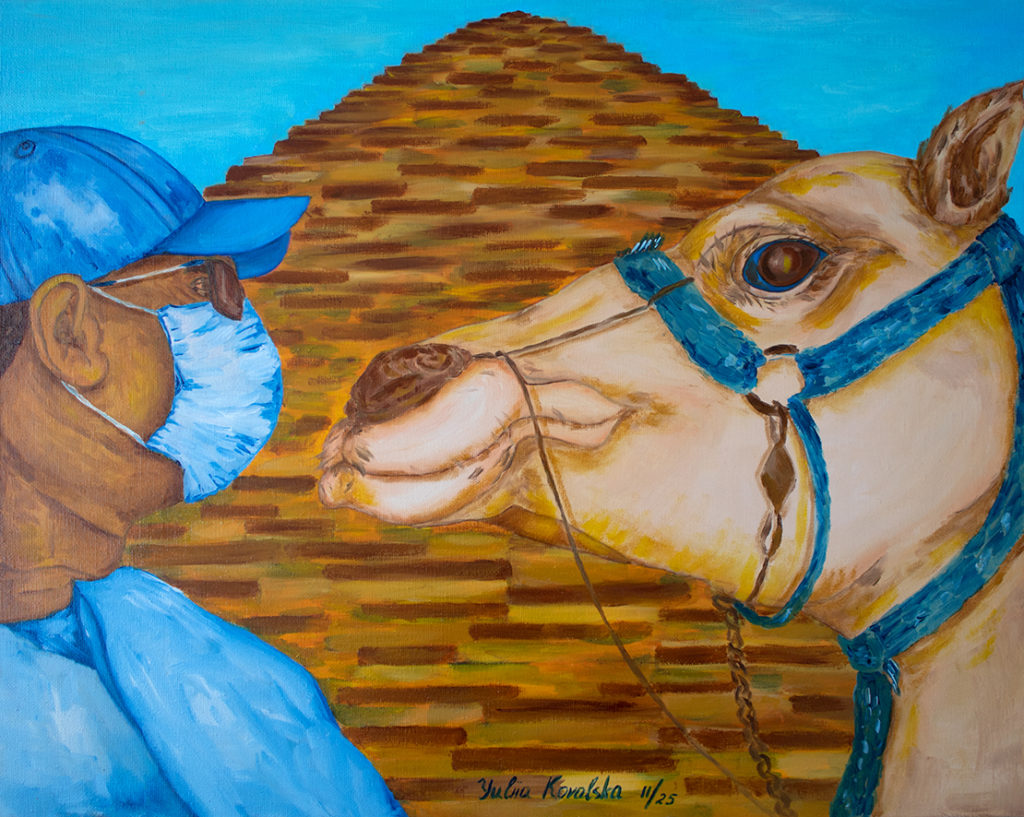
One of the most affected sectors of the global economy by quarantine restrictions is tourism. Countries with a significant share of tourism in their economies have suffered the most. Egypt is one such country. It is not only people who have suffered from the covid restrictions there.
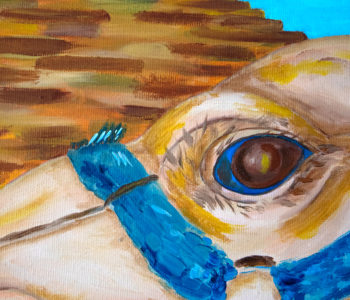
And the camel was very surprised because he was not wearing a mask. How do you explain to a man that everyone needs protection?!
Egypt. Coronavirus. A hit to the tourism industry — what should camels do? Frame option
Egypt. Coronavirus. A hit to the tourism industry — what should camels do?
Egypt. Coronavirus. A hit to the tourism industry — what should camels do? Close-up. Signature of the artist
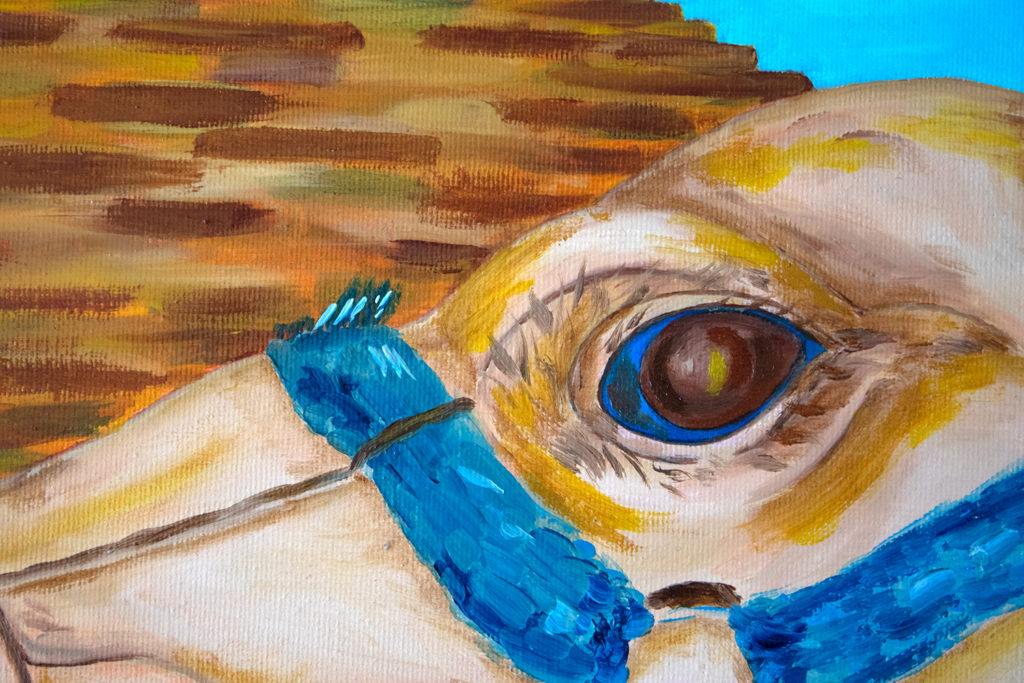
Egypt. Coronavirus. A hit to the tourism industry — what should camels do? Close-up
Egypt. Coronavirus. A hit to the tourism industry — what should camels do? Close-up
Egypt. Coronavirus. A hit to the tourism industry — what should camels do? Sidepiece. Close-up
Egypt. Coronavirus. A hit to the tourism industry — what should camels do? Interior: liviing-room with a picture on the wall
If you are interested in this painting and would like to purchase it, please fill out and send the feedback form on the home page. You can also purchase this painting at the online galleries linked on the home page. Dispatch from Kiev (Ukraine)
TITLE: Egypt. Coronavirus. A hit to the tourism industry — what should camels do? COLLECTION: Big pandemic YEAR: 2025 ARTWORK TYPE: Original Art/One of a kind DIMENSIONS: 50x40sm TECHNIQUES: Oil on acrylic undercoat RELATED THEMES: Portrait, Animals SUPPORT OR SURFACE: Canvas FRAMING: No
It’s hat season as summer heats up! I must have missed the summer if I decided to paint this picture in the middle of winter. I thought a lot about the ribbons. I decided to leave them off.
Hot season — hat season. Frame option
Hot season — hat season. Close-up
Hot season — hat season. Close-up
Hot season — hat season. Close-up. Signature of the artist
Hot season — hat season. Interior: liviing-room with a picture on the wall
Hot season — hat season
NOT FOR SALE
TITLE: Hot season — hat season YEAR: 2025 ARTWORK TYPE: Original Art/One of a kind DIMENSIONS: 65x50sm TECHNIQUES: Oil RELATED THEMES: Portrait SUPPORT OR SURFACE: Paper FRAMING: No CATALOGUE N: Kovalska112
TITLE: Cousins YEAR: 2024 ARTWORK TYPE: Original Art/One of a kind DIMENSIONS: 32,5 х 46 cm DIMENSIONS(FRAME): 36 х 49 cm TECHNIQUES: Oil RELATED THEMES: Portrait SUPPORT OR SURFACE: Paper FRAMING: Yes CATALOGUE N: Kovalska095
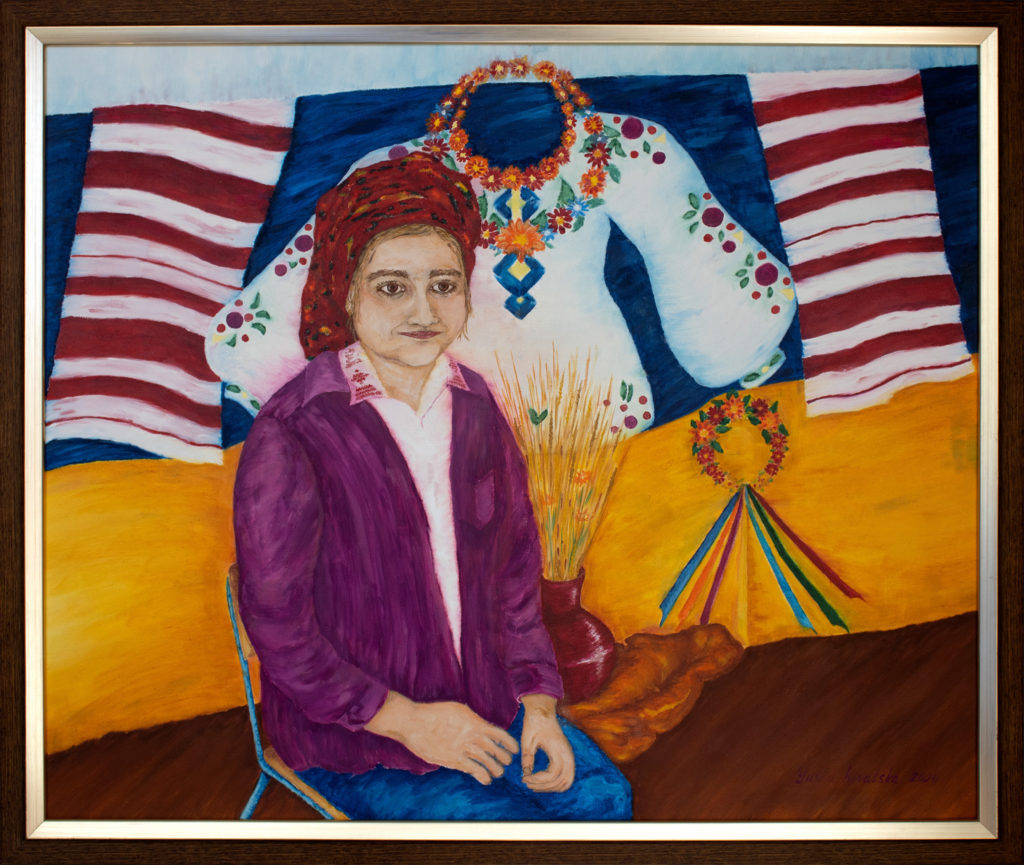
A red scarf, preserving family memories, adorns the head of a daughter at a fashion show dedicated to Ukrainian Scarf Day at the Ukrainian National Clothing Festival in 2024. This day has become not only a symbol of the indestructibility of our traditions, but also a revival of the significance of the main symbol of femininity and a family heirloom. I inherited this scarf from my grandmother. It not only keeps you warm in the cold, but also heals all ailments. Wrap yourself in it, and you feel like you are among the angels of childhood, safe and protected by many generations of ancestors. Now my daughter has chosen it from my wardrobe as the most fashionable and valuable item to emphasise her look. Since ancient times, scarves have accompanied women throughout their lives: christenings, weddings, even funerals. The scarf was passed down from mother to daughter, preserving family memory and protecting the family line.
At the festival of national Ukrainian clothes. Frame option
At the festival of national Ukrainian clothes
At the festival of national Ukrainian clothes. Close-up
At the festival of national Ukrainian clothes. Close-up. Signature of the artist
At the festival of national Ukrainian clothes. Frame
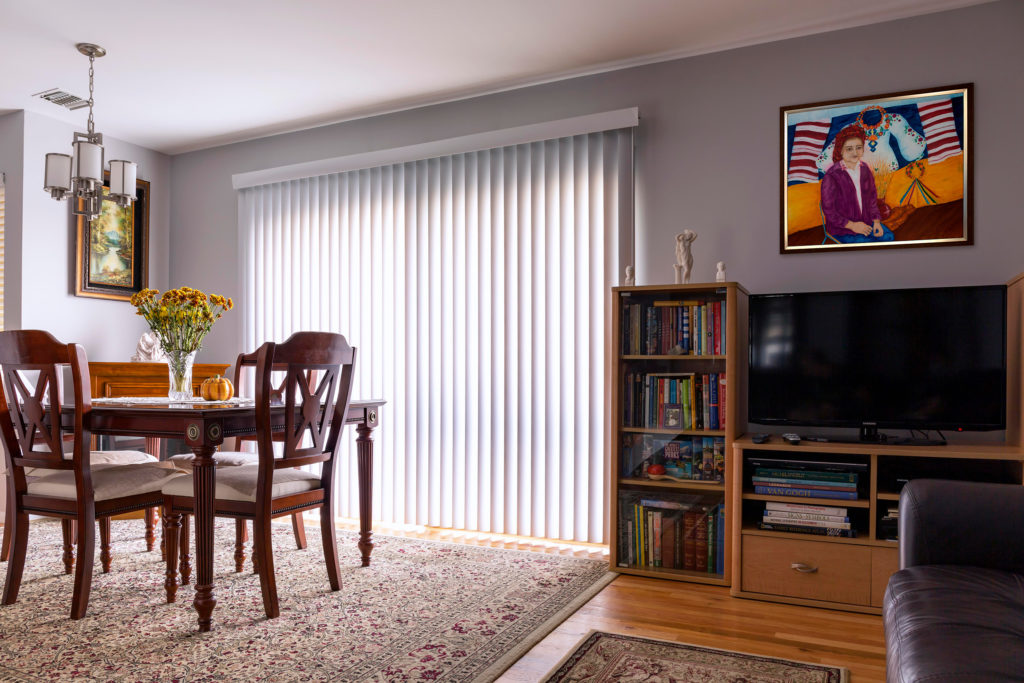
At the festival of national Ukrainian clothes. Interior: liviing-room with a picture on the wall
TITLE: At the festival of national Ukrainian clothes YEAR: 2024 ARTWORK TYPE: Original Art/One of a kind DIMENSIONS: 60,5x50cm DIMENSIONS (FRAME): 65,5х55,5cm TECHNIQUES: Oil RELATED THEMES: Portrait SUPPORT OR SURFACE: Paper FRAMING: Yes CATALOGUE N: Kovalska094
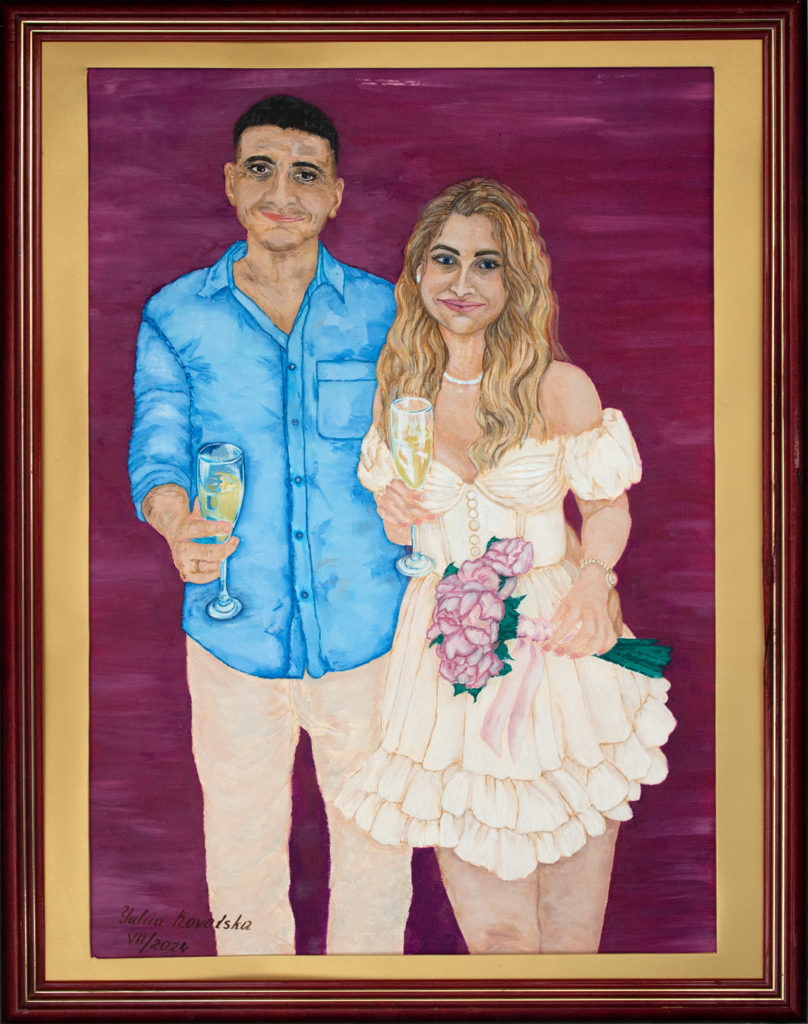
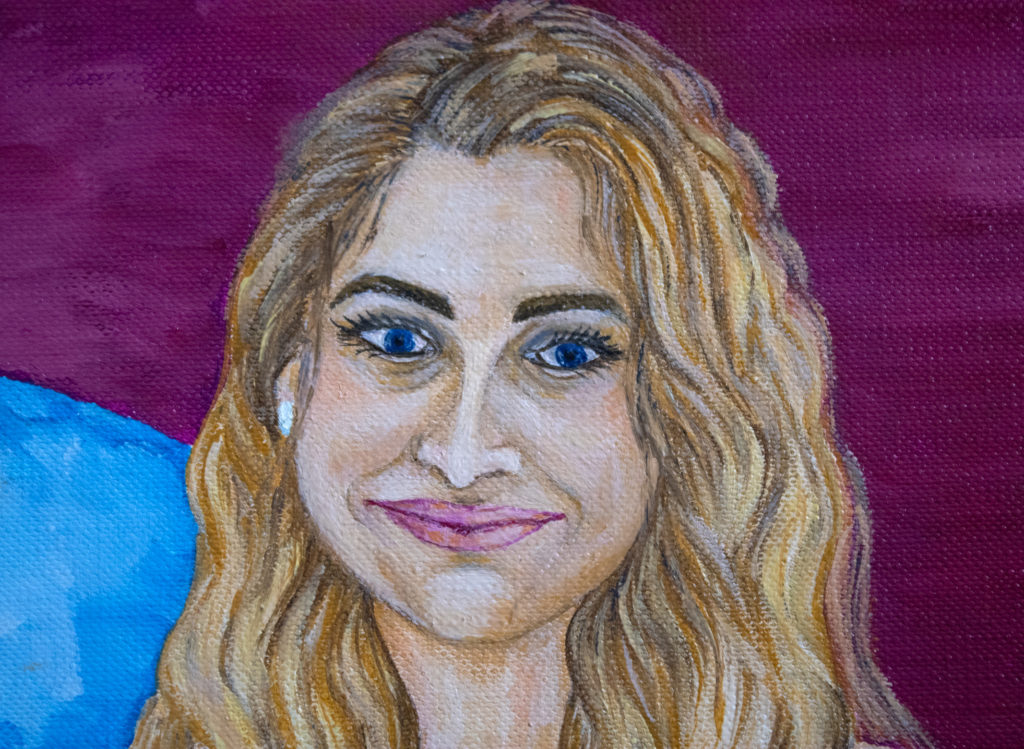
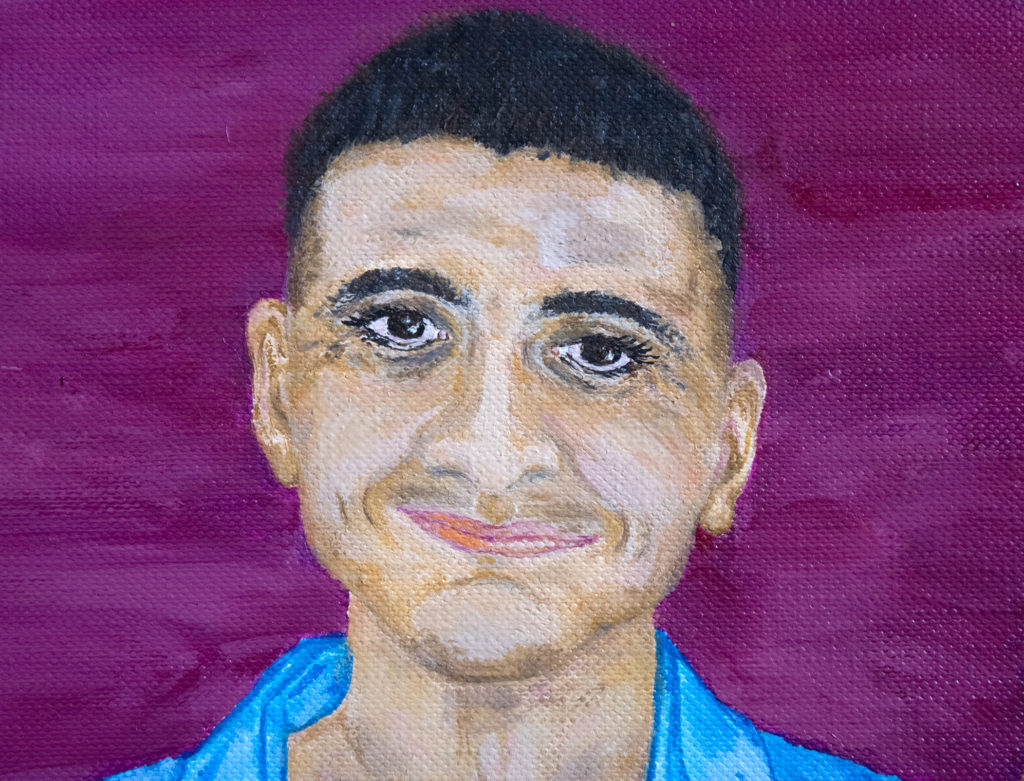
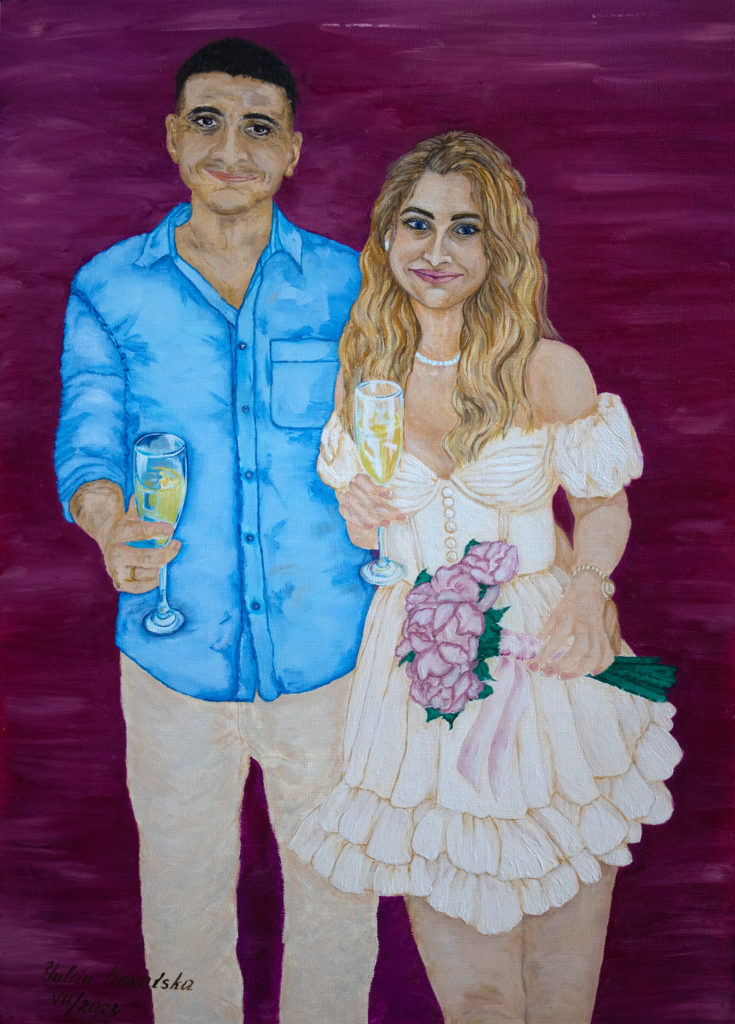
TITLE: Newlyweds YEAR: 2024 ARTWORK TYPE: Original Art/One of a kind DIMENSIONS: 32,5х46сm DIMENSIONS (FRAME): 40,5х51,5cm TECHNIQUES: Oil RELATED THEMES: Portrait SUPPORT OR SURFACE: Paper FRAMING: Yes CATALOGUE N: Kovalska093
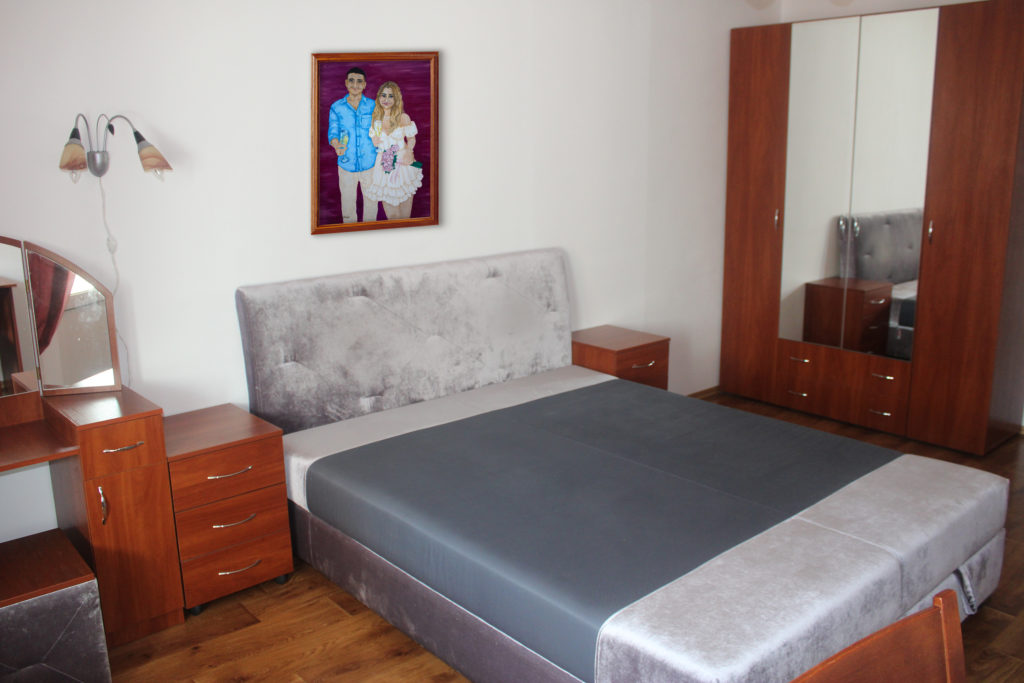
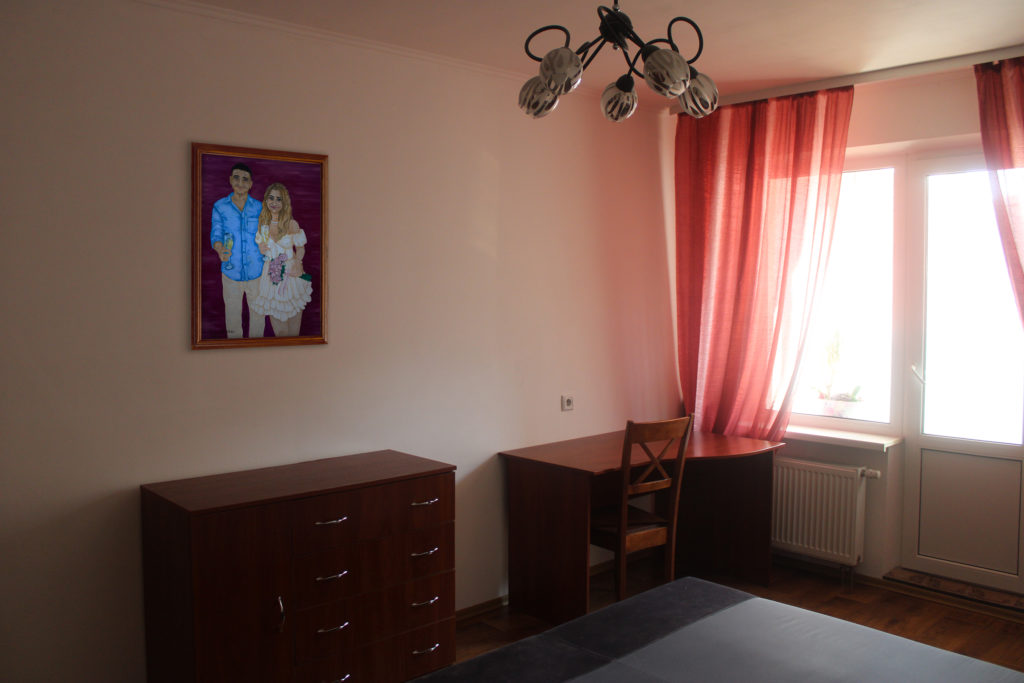
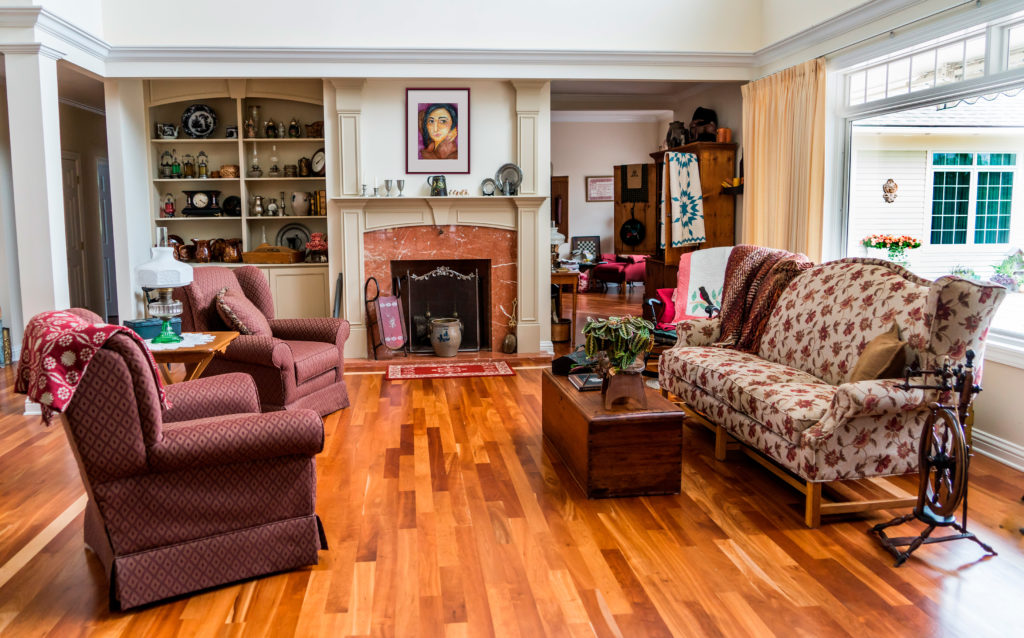
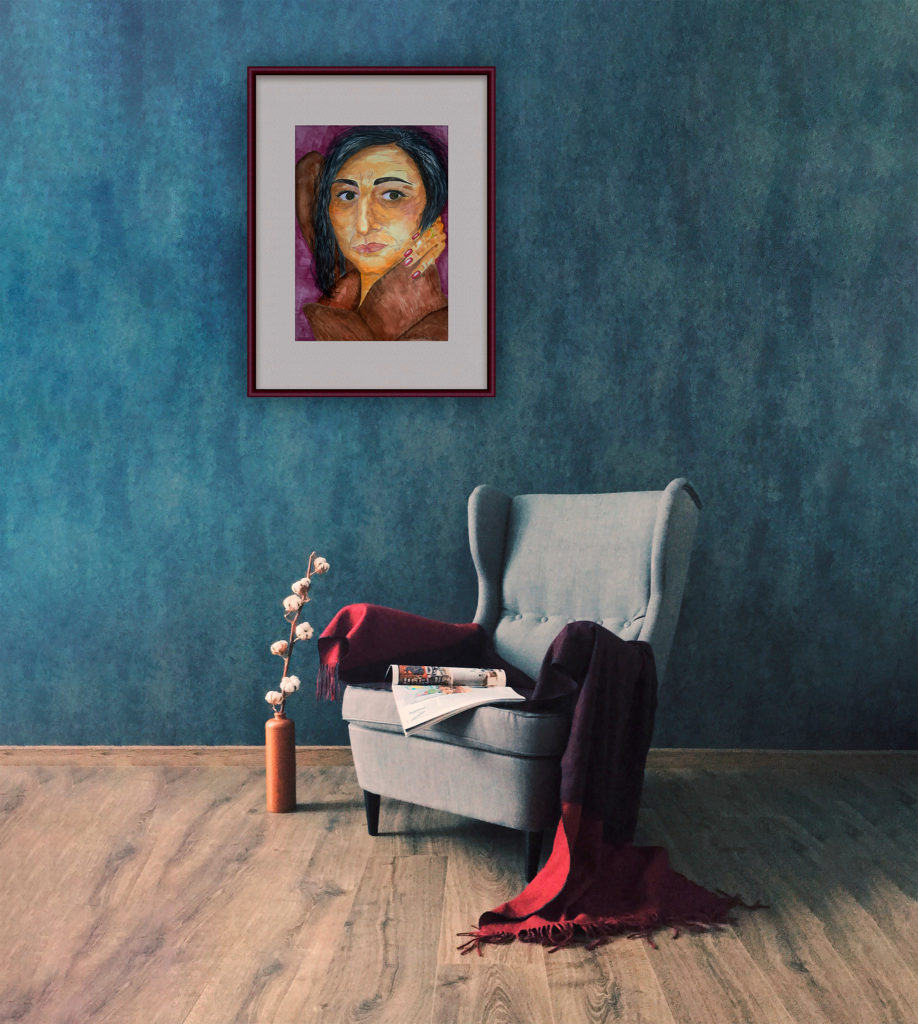
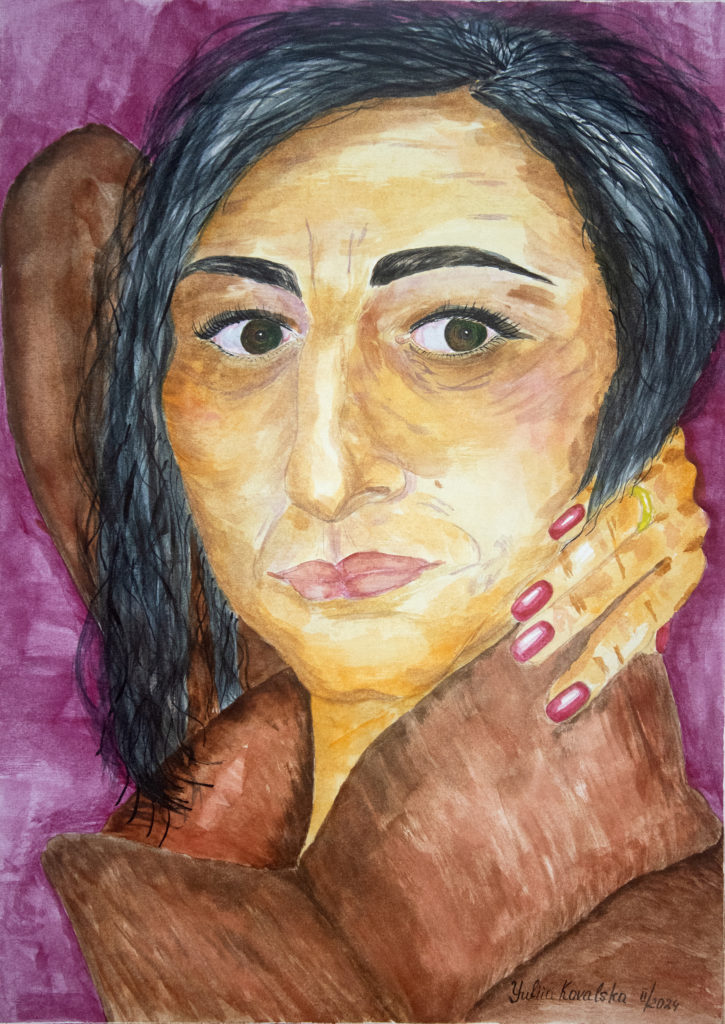
Self-portrait. Living room with a picture on the wall
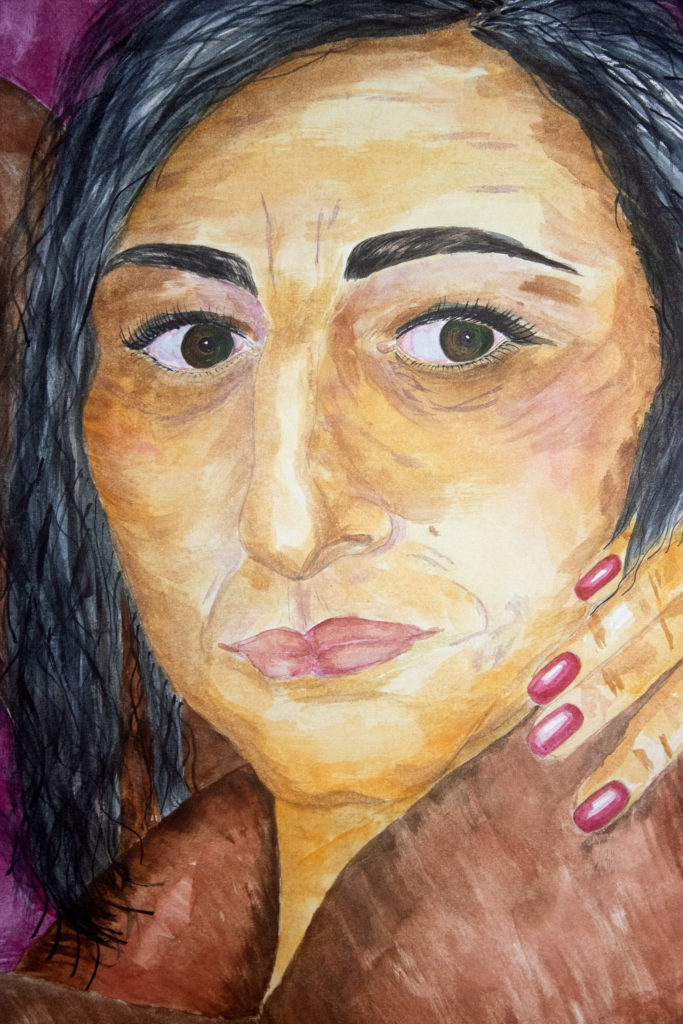
Self-portrait. Close up
Self-portrait. Living room with a picture on the wall
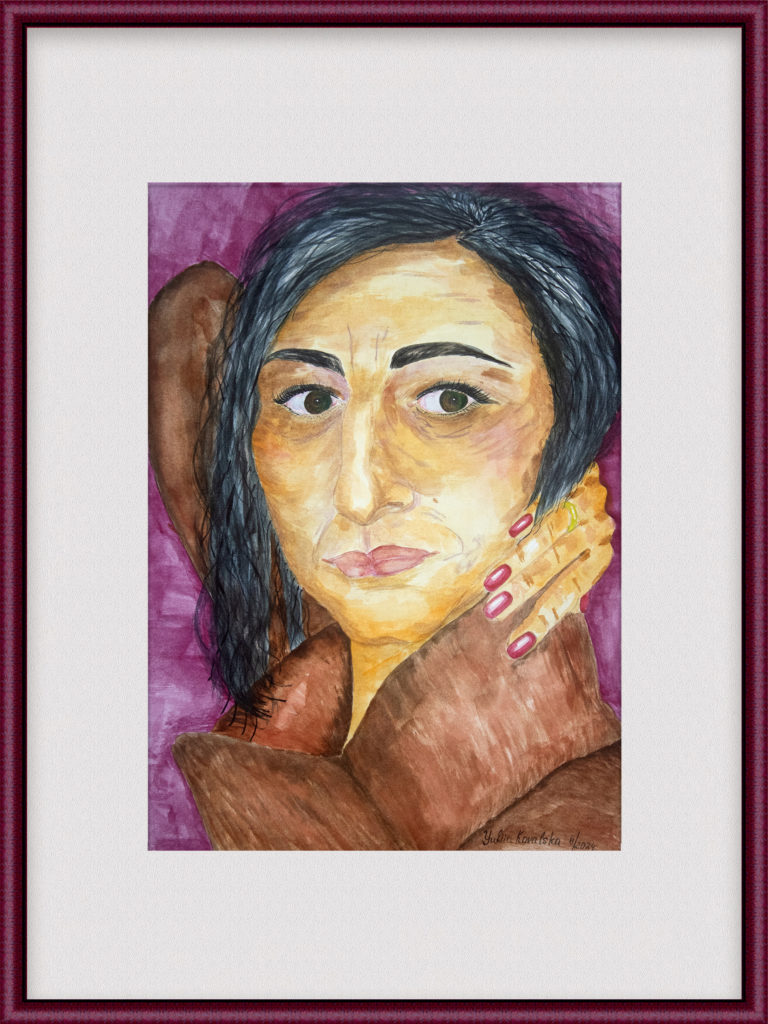
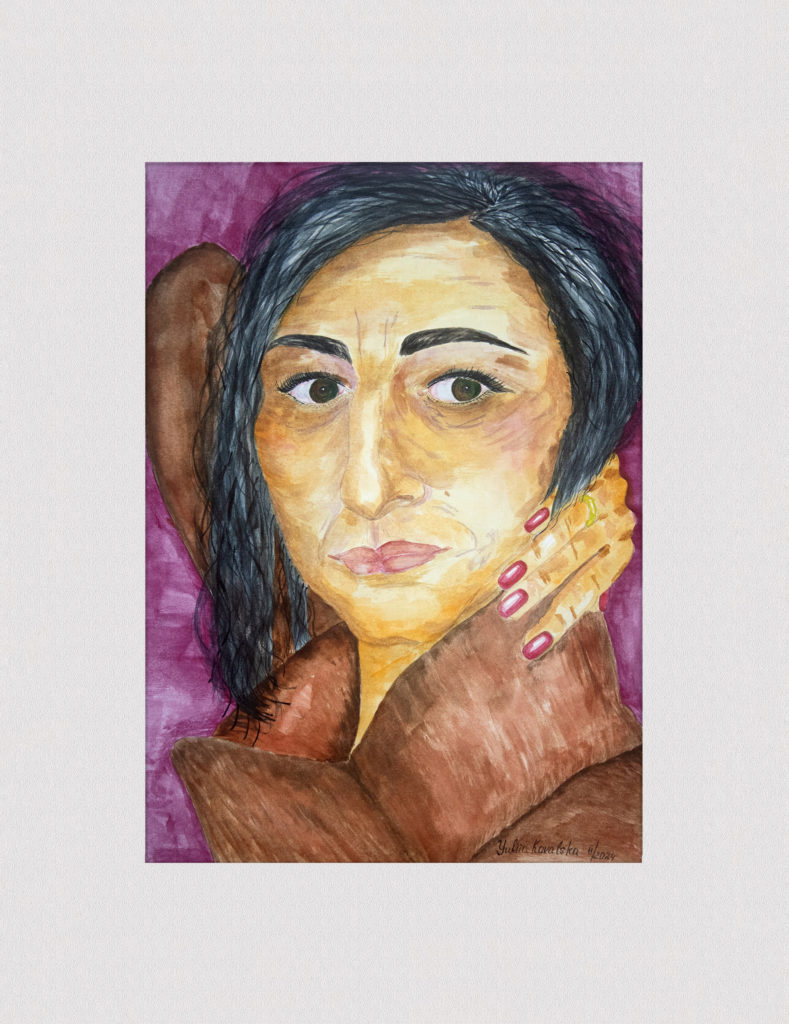
Self-portrait
If you are interested in this painting and would like to purchase it, please fill out and send the feedback form on the home page. You can also purchase this painting at the online galleries linked on the home page. Dispatch from Kiev (Ukraine)
TITLE: Self-portrait YEAR: 2024 ARTWORK TYPE: Original Art/One of a kind DIMENSIONS: A3 (29.7 cm x 42 cm) TECHNIQUES: Watercolor RELATED THEMES: Portrait SUPPORT OR SURFACE: Paper FRAMING: No CATALOGUE N: Kovalska075
 Landscape